
Fred Schrader, the founder of Schrader Cellars in Napa Valley, is the individual most commonly associated with net worth searches for this name. Based on publicly available data about the winery's acquisition and his documented business activities, his net worth is estimated in the range of $5 million to $20 million, though no confirmed, verified figure has been publicly disclosed. That range reflects the known sale of Schrader Cellars to Treasury Wine Estates in 2017 and his broader career earnings as a winemaker and entrepreneur. Everything beyond that is an estimate, and this article explains exactly where those numbers come from and how to pressure-test them yourself.
Fred Schrader Net Worth: Verified Estimates, Sources, and How to Check

Marcus Rothstein
13 Jun 2026

Which Fred Schrader are we actually talking about?
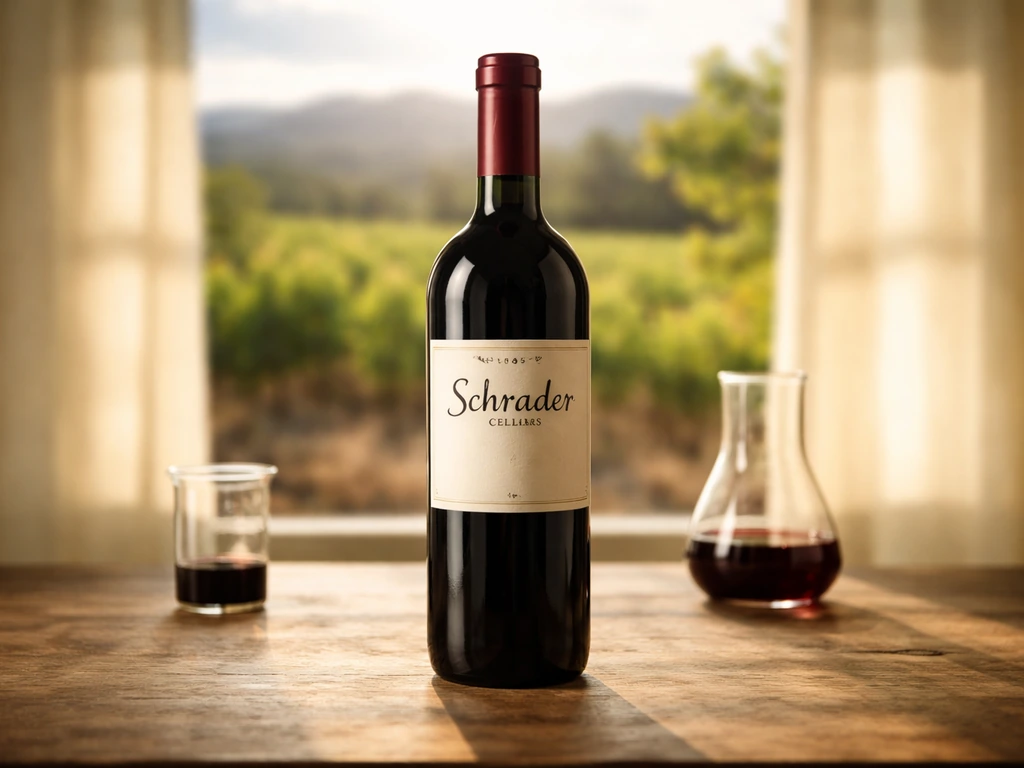
The name Fred Schrader turns up for at least a few distinct individuals across public records. A Fred Schrader works as a patent attorney at Dentons in Auckland, New Zealand. Another Fred Schrader appears on LinkedIn as a professional in Yorkton, Saskatchewan, affiliated with Conexus Credit Union. LinkedIn profile evidence for a Fred Schrader in Yorkton, Saskatchewan affiliated with Conexus Credit Union supports this identification LinkedIn profile shows a Fred Schrader in Yorkton, Saskatchewan affiliated with Conexus Credit Union. Neither of those individuals has a meaningful public financial profile that would drive net worth searches at any scale.
The Fred Schrader this article is about is the American winemaker and entrepreneur who founded Schrader Cellars, LLC in Napa Valley, California, in 1998. Schrader Cellars states it was founded in 1998 by Fred Schrader, aligning with the founder attribution discussed in this article founded Schrader Cellars, LLC in Napa Valley, California, in 1998. He is the only Fred Schrader with a documented business history large enough to generate credible net worth discussion, and federal court records explicitly name him in connection with Schrader Cellars' ownership interests. If you landed here looking for one of the other individuals named above, their financial profiles are not publicly documented at any meaningful level.
Net worth: range vs. confirmed figure
There is no confirmed, publicly disclosed net worth figure for Fred Schrader. He is a private individual who has not filed public financial disclosures, held public office, or been required to report personal wealth through regulatory channels. What we do have is a documented business event: Schrader Cellars was acquired by Treasury Wine Estates (ASX: TWE) in 2017. Treasury Wine Estates is a publicly traded Australian company, and the acquisition was reported in trade press, but the exact purchase price was not publicly disclosed in granular detail.
Working from what is documented, a reasonable estimate of Fred Schrader's net worth falls in the $5 million to $20 million range. The lower bound reflects a conservative valuation of a boutique Napa winery with limited production volume and strong critical ratings. The upper bound accounts for the premium valuations that cult Napa Cabernet brands command, particularly those with 100-point scores from major critics.
Schrader Cellars achieved exactly that kind of recognition, which historically pushes acquisition multiples significantly higher than standard winery benchmarks. Any figure outside this range, either lower or higher, should be treated with skepticism unless it is accompanied by a specific sourced transaction or disclosure. If you are trying to track Hank Schrader net worth specifically, you will need to separate that from Fred Schrader’s documented winery-based wealth range.
How net worth estimates like this are actually calculated

For private individuals without public financial disclosures, net worth estimates are built from inference, not direct data. The standard methodology starts with the most significant documented financial event, in this case the Treasury Wine Estates acquisition, and works outward from there. Analysts and researchers typically apply industry valuation multiples to known revenue or production figures, then subtract estimated liabilities, add known or inferred personal assets, and arrive at a range rather than a point estimate.
For wineries specifically, valuations are typically expressed as a multiple of annual revenue or a per-case production value, adjusted heavily for brand prestige. Schrader Cellars produced a small number of ultra-premium Cabernet Sauvignon bottlings from To Kalon Vineyard fruit in Oakville. Production at that tier is intentionally limited, which supports high per-bottle pricing but caps total revenue. The combination of scarcity, critical acclaim, and a strategic buyer in Treasury Wine Estates is what justifies the higher end of the estimated range.
What this method cannot capture is personal debt, other private investments, real estate holdings outside public records, or the specific deal structure of the acquisition (whether it was all-cash, earnouts, equity in the acquiring company, or some combination). Those unknowns are why any net worth figure for a private individual should be treated as an informed estimate, not a confirmed valuation.
Documented income and career earnings
Fred Schrader's documented income sources center almost entirely on Schrader Cellars, the business he founded in 1998. Before that, his background was in real estate, not winemaking, which is relevant because it suggests he brought capital and deal-making experience to the winery venture rather than entering it as a career winemaker from the ground up.
Schrader Cellars built its reputation on single-vineyard Cabernet Sauvignon from the To Kalon Vineyard, working with winemaker Thomas Rivers Brown. The wines attracted repeated 100-point scores from Robert Parker's Wine Advocate and consistently appeared on top-rated lists. At that quality tier, retail pricing typically ranges from $150 to $300 or more per bottle, and production volumes at cult Napa wineries are usually between 1,000 and 5,000 cases annually. Even at conservative estimates, the annual revenue potential for a winery in that tier is substantial relative to its size.
The most significant documented earnings event is the 2017 sale to Treasury Wine Estates. While the exact sale price remains undisclosed, Treasury Wine Estates made the acquisition as part of a deliberate strategy to build a portfolio of luxury American wine brands, which signals they paid a meaningful premium for the Schrader name and its cult reputation.
Business holdings, ownership, and other assets
The primary documented business holding is Schrader Cellars, LLC, incorporated in California. Federal litigation records, including findings of fact and conclusions of law in Schrader Cellars, LLC v. Roach, explicitly reference Fred Schrader's ownership interests in the entity. This confirms his role as a principal in the business, not just a figurehead or brand ambassador.
Following the 2017 acquisition by Treasury Wine Estates, it is unclear whether Fred Schrader retained any equity stake, consulting role, or earnout arrangement with the acquiring company. These details are not publicly disclosed, and no subsequent press coverage confirms his ongoing financial relationship with the brand.
Beyond the winery, no other significant business holdings, real estate portfolios, or investment positions have been documented through public records as of June 2026. His earlier background in real estate may mean additional assets exist, but without public records to anchor those claims, they remain speculative. This is a meaningful data gap that affects the reliability of any net worth estimate.
How to verify or challenge any Fred Schrader net worth figure you find online
Many websites publish net worth figures for private individuals without citing sources, and the numbers often vary wildly from site to site. Many websites publish net worth figures for private individuals without citing sources, and the numbers often vary wildly from site to site hank schimschat net worth. Many websites publish hank schyma net worth figures for private individuals without citing sources, and the numbers often vary wildly from site to site.
If you want to sanity-check any claim about Fred Schrader net worth, focus on whether it ties back to documented events like the Treasury Wine Estates acquisition. Here is a practical checklist for evaluating any estimate you encounter. If you are still trying to interpret what those numbers mean for Harland Schraufnagel net worth, focus on whether any real transaction or disclosure is cited Fred Schrader net worth.
- Check the California Secretary of State business registry (bizfileonline.sos.ca.gov) for Schrader Cellars, LLC filings. These confirm the entity's existence, registered agents, and any amendments that might reflect ownership changes.
- Search PACER (federal court records) for cases involving Schrader Cellars or Fred Schrader. The Schrader Cellars v. Roach litigation is publicly accessible and provides direct, named references to ownership.
- Review Treasury Wine Estates' annual reports and investor filings (available on the ASX and TWE investor relations site) for any disclosed acquisition figures or references to the Schrader brand valuation.
- Cross-reference against established wine industry trade publications such as Wine Spectator, Decanter, and the Wine Advocate for any reported sale prices or business news around the 2017 acquisition.
- If a website claims a specific dollar figure without linking to a transaction record, press release, or court document, treat the figure as unverified speculation regardless of how confidently it is presented.
- Use LinkedIn and professional directories to confirm you are reading about the correct Fred Schrader (the Napa winemaker), not the Auckland patent attorney or the Saskatchewan credit union professional.
Discrepancies between websites are almost always the result of one site inventing a figure that other sites then copy. If three sites all show the same suspiciously round number with no source, that is a signal of copy propagation, not independent verification. A real, defensible estimate requires at least one anchor data point tied to a documented financial event.
Comparing what's known vs. what's estimated
| Data Point | Status | Source Type |
|---|---|---|
| Schrader Cellars founded 1998 by Fred Schrader | Confirmed | Winery's own published history |
| Fred Schrader named as ownership principal in Schrader Cellars, LLC | Confirmed | Federal court records (Schrader Cellars v. Roach) |
| Schrader Cellars acquired by Treasury Wine Estates (2017) | Confirmed | Trade press and TWE investor communications |
| Exact acquisition price | Not publicly disclosed | No primary source available |
| Net worth range of $5M to $20M | Estimate | Inferred from winery valuation multiples and acquisition context |
| Post-sale personal holdings or assets | Unknown | No public records identified as of June 2026 |
As of date, trends over time, and sources
The estimates and data in this article reflect publicly available information as of June 13, 2026. The most significant wealth-generating event in Fred Schrader's documented history, the 2017 Treasury Wine Estates acquisition, is now almost nine years in the past. No subsequent business venture, public filing, or credible press report has emerged to update his financial picture in the intervening period.
Prior to the acquisition, the trajectory was clearly upward: the winery launched in 1998, steadily built critical acclaim through the 2000s, and reached peak valuation visibility in the 2010s as cult Napa Cabernet prices and winery acquisition premiums rose sharply. The sale to Treasury Wine Estates represents the peak documented financial event. Whether Fred Schrader's personal wealth has grown, held steady, or declined since 2017 is not answerable from current public records.
For readers wanting to stay current, the most useful monitoring approach is to watch TWE investor filings for any brand-specific disclosures, track California business registry updates for any new Schrader-linked entities, and monitor Napa Valley wine industry press for any new ventures or public statements from Fred Schrader himself. On a site like this one, profiles for figures such as Ken Schrader (NASCAR) represent a very different wealth profile built on motorsport earnings and sponsorships rather than luxury goods entrepreneurship, which is a useful reminder that surname similarity does not mean comparable wealth trajectories or estimation methods. If you are instead researching Ken Schrader's net worth, look for NASCAR-specific earnings, sponsorship history, and verified reporting rather than winery-acquisition logic ken schrader net worth.
Bottom line: Fred Schrader's net worth is best understood as an informed estimate in the $5 million to $20 million range, anchored by the documented 2017 winery acquisition, constrained by the absence of a disclosed sale price, and subject to revision if new primary records emerge. Any figure presented with more precision than that range should be treated with skepticism unless a specific sourced transaction supports it.
FAQ
Why do net worth sites disagree on Fred Schrader’s number so much?
Most sites rely on inference for private individuals, then swap in different assumptions for the winery’s revenue multiple and Schrader’s personal ownership share. If they do not disclose an underlying transaction (for example, an acquisition price, an equity percentage, or court-documented holdings), the result can look precise but is essentially a guess.
Is the $5 million to $20 million range meant to include all of Fred Schrader’s assets or only his winery-related wealth?
It is primarily anchored to the documented Schrader Cellars sale context and typical valuation logic. Because the article notes key missing information (personal debt, off-record real estate, and whether he retained any equity after 2017), the range should be treated as an overall estimate, but it may undercount or overcount components that are not publicly verifiable.
What evidence would most strongly change the estimate up or down?
Two things would matter most: (1) a publicly disclosed purchase price or deal structure detail (cash, earnout, or equity) for the 2017 acquisition, and (2) any later public record showing Schrader’s ownership in new entities or disclosed compensation tied to additional ventures. Without those, any “exact figure” is unlikely to be defensible.
How can I tell whether a “Fred Schrader” mention is the winemaker or one of the other people with the same name?
Check for anchors like Napa Valley references, Schrader Cellars or To Kalon Vineyard, or court record naming tied to Schrader Cellars, LLC. Employment bios in unrelated locations (for example, a patent attorney in Auckland or a finance professional in Saskatchewan) are strong signals you are looking at a different person.
Could Fred Schrader’s wealth be much higher than $20 million even if the purchase price was undisclosed?
It could be, but you would need non-speculative anchors such as other documented equity stakes, a later business sale, or property records that are clearly tied to him. The article’s range already tries to account for premium acquisition multiples, but it cannot reliably quantify unrelated investments that are not publicly documented.
Does the 2017 acquisition automatically mean he got a large payday?
Not necessarily. Even when a private founder is a principal, the personal outcome depends on the acquisition structure, whether he held equity at the time of sale, and whether any consideration was deferred through earnouts. Since those specifics are not publicly disclosed in the article, the range reflects uncertainty rather than certainty about a one-time payout.
What’s the fastest way to sanity-check a “$X million” claim you see online?
Look for a citation to a primary event (like the 2017 acquisition) and a stated method (for example, revenue multiple plus ownership share). If the claim is a round number with no underlying transaction, assume it was copied or fabricated rather than independently calculated.
What should I look for in TWE disclosures to get more clarity on brand-level economics?
Focus on any brand-specific discussion that mentions acquired brands, performance, integration milestones, or valuation-related language. Even if TWE does not disclose personal payoffs, brand-level updates can help determine whether Schrader-related value likely rose or fell after acquisition.
How often could his net worth realistically change given the article says there was no update after 2017?
Without new documented business events, the main drivers would be investment returns, real estate changes, or ongoing private business roles that are not publicly reported. Net worth estimates typically remain static in ranges until a new anchor transaction or disclosure appears.
Does the absence of public financial disclosures mean we should ignore net worth estimates entirely?
No, but you should downgrade confidence. The article’s approach is to treat numbers as bounded estimates anchored to documented events, not verified personal valuations. If a source claims certainty beyond that, treat it as unreliable.
Next Article
Hank Schyma Net Worth: Confirmed Facts and Estimates
Hank Schyma net worth guide: confirm identity, separate verified data from estimates, and build a sourced net-worth prof