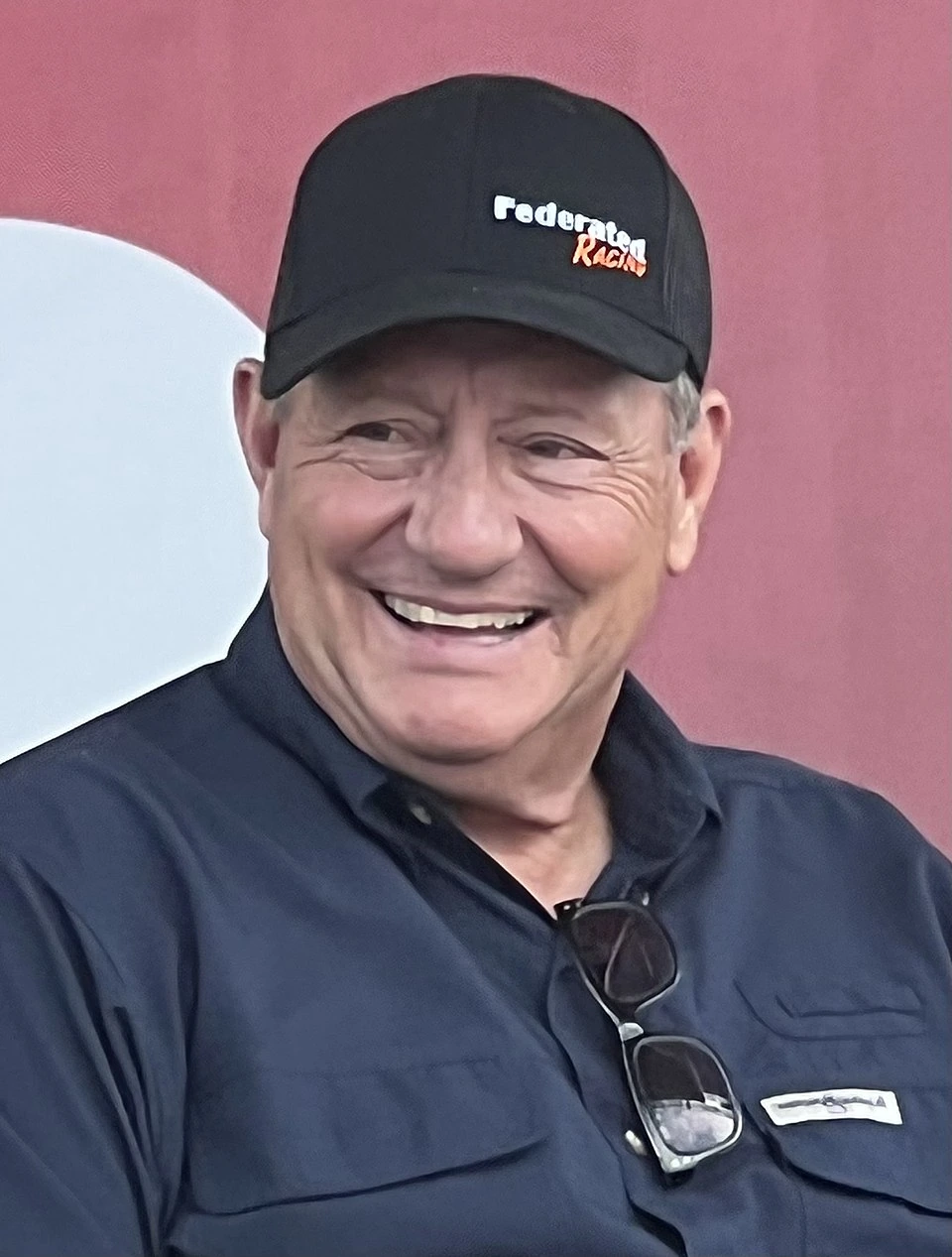
For practical purposes, a range of $20 million to $30 million is a defensible estimate given what can actually be traced through public records: career prize money, track ownership, team operations, and a multi-decade sponsorship relationship. Anything outside that range should come with a source you can check yourself.
Who Ken Schrader is and what puts money in his pocket
Ken Schrader is a Missouri-born motorsports veteran who ran 29 seasons in the NASCAR Cup Series before stepping back from full-time Cup competition in 2013. He is one of the most recognizable names from the late 1980s and 1990s boom era of NASCAR, with three consecutive Daytona 500 pole positions from 1988 through 1990, a USAC Hall of Fame induction, and over 640 documented NASCAR Cup starts. But Schrader's financial story is not just about prize money from his driving career. He built a parallel income architecture through track ownership, team operations, and one of the longer sponsorship relationships in the sport.
His income streams across his career and post-Cup years can be grouped into four main categories: race winnings and appearance fees, sponsorship and spokesperson income, ownership stakes in racing facilities, and his racing team (Ken Schrader Racing, or KSR). Each of those categories contributes differently to the net worth picture, and each has a different level of public documentation.
How net worth is actually calculated for someone like Schrader

Net worth is total assets minus total liabilities. For a private individual like Schrader (he is not a publicly traded company and has not filed public financial disclosures), there is no single authoritative source. What researchers do instead is aggregate available signals: documented prize earnings from race records, known business assets like track ownership, publicly reported sponsorship deals, and team operational history. The methodology used on this site follows the same principle: we identify what is publicly checkable, label what is estimated, and note the gaps explicitly.
Celebrity Net Worth's page on Schrader includes a section on year-by-year NASCAR Sprint Cup earnings, which is a useful starting point. Racing-Reference also provides structured earnings fields per race entry that a researcher can aggregate to build a career prize-income estimate. The Indianapolis Motor Speedway's Brickyard 400 stats page, for example, shows a 2012 earnings figure of $148,825 for a single event.
Those per-event figures, when added across hundreds of starts, produce a career prize total that is in the range of $25 million in race winnings alone, which one source (the Grand Forks Herald) described as "winning four races and $25 million in earnings" over his Cup career. That figure covers race purses only, not net worth, so conflating the two is a common and significant error.
Income and assets that are publicly documented
Race prize money is the most traceable component. Schrader's per-event earnings are logged in racing databases and can be cross-referenced by series. A concrete anchor: a Wikipedia entry for the Unocal 76 Challenge records that Schrader earned a total of $284,450 from a single Daytona 500-related bonus and race purse, described at the time as a NASCAR record. That kind of per-event earning, multiplied across a 640-start career spread over nearly three decades, produces a substantial cumulative gross.
Track ownership is the second major documented asset. NASCAR’s profile of Ken Schrader states he owned the Federated Auto Parts Speedway at I-55 in Pevely, Missouri and has been a part-owner of Macon Speedway owned the 1/3-mile Federated Auto Parts Speedway at I-55 in Pevely, Missouri.
Schrader owned the 1/3-mile Federated Auto Parts Speedway at I-55 in Pevely, Missouri for approximately 29 to 30 years before agreeing to sell it in December 2024. The sale agreement was announced on December 13, 2024, via a press release from the track itself, with the Marler and Schrader families transferring ownership to Josh Carroll.
Real estate and facility assets like this are not liquid, but they represent meaningful balance-sheet value. The sale almost certainly converted a long-held illiquid asset into cash, which would represent one of the more significant liquidity events in Schrader's recent financial history.
The co-ownership stake in Macon Speedway in Illinois is a second facility asset. Schrader joined co-owners Tony Stewart, Kenny Wallace, and promoter Bob Sargent starting in 2007. As of the most recent available information, that co-ownership remains in place, though the financial terms and equity split are not publicly disclosed. You can verify the co-ownership itself through both the Macon Speedway website and Wikipedia, but the dollar value of the stake is genuinely unknown without access to private financials.
On the team side, Ken Schrader Racing operated as a professional stock car team, most recently fielding the No. 52 car in the ARCA Menards Series for drivers including Natalie Decker. Team operations typically produce modest or negative margins at the small-team level, so KSR is more relevant as an activity and sponsorship vehicle than as a net-worth generator on its own.
Business holdings and endorsements: what to verify and what's still missing
The most verifiable endorsement relationship in Schrader's public record is his work with Federated Auto Parts. SchraderRacing.com states he has served as a spokesperson for Federated Auto Parts for 25 consecutive years, and SEMA reporting confirms Federated served as the primary sponsor of the Schrader Racing ARCA car. A 2015 press release archived from SchraderRacing.com also documents a joint scheduling announcement between Federated Auto Parts and Schrader, showing the relationship extended well past his full-time Cup career. Sponsorship deals of that duration and visibility in motorsports typically carry six-figure annual values at minimum, though the exact terms are private.
What is missing from the public record: specific dollar amounts for the I-55 track sale, equity percentages in Macon Speedway, annual spokesperson fees, team operational balance sheets, and any real estate or investment holdings outside of motorsports. These gaps are not unusual for a private individual who has never sought public capital, but they do mean that any single net worth number should be treated as an informed estimate, not a balance sheet.
For readers who want to dig deeper into how other motorsports-adjacent figures build wealth through similar combinations of driving income and business holdings, the profile of Fred Schrader's net worth is a useful parallel case on this site, illustrating how asset documentation works when public records are similarly thin.
How Schrader's wealth likely grew across career phases
Schrader's financial trajectory breaks into reasonably distinct phases, each with different income characteristics.
| Career Phase | Key Period | Primary Income Source | Confidence Level |
|---|
| Early NASCAR Cup years | Mid-1980s to early 1990s | Race prize money, growing sponsorship | Moderate (race records exist) |
| Peak Cup career | 1988 to mid-1990s | Top-team salaries, Daytona bonus earnings, major sponsorship | Moderate (records and known team affiliations) |
| Mid-career and team ownership | Late 1990s to 2012 | Driver income, KSR team operations, I-55 ownership begins | Low-moderate (team financials private) |
| Post-Cup and business pivot | 2013 to 2024 | Spokesperson fees, Macon co-ownership, ARCA/dirt racing | Low (most data private) |
| Post-track-sale | Dec 2024 onward | Liquidity from I-55 sale, Macon stake, appearances | Estimated only |
The peak earning years were almost certainly the late 1980s through the mid-1990s, when Schrader was a front-running Cup driver at major teams with full factory-backed sponsorship. His three consecutive Daytona 500 pole positions from 1988 to 1990 coincided with NASCAR's biggest commercial expansion, when driver visibility translated directly into sponsorship demand and salary leverage. The I-55 track acquisition, which began roughly in the mid-1990s based on the approximately 29-year ownership timeline confirmed before the 2024 sale, overlapped with the end of his peak earning years, suggesting he was deploying racing income into a business asset during that period.
The 2013 transition away from full-season Cup driving did not mean an income cliff. Schrader contracted to run at least nine races in 2013 for FAS Lane Racing with Federated Auto Parts sponsorship, and the spokesperson relationship continued. Post-2013 income is harder to quantify but the Federated relationship, the track operations, and ongoing dirt-track racing activity kept him financially active. The December 2024 sale of I-55 is the most significant single financial event in at least a decade, and depending on the sale price (which has not been publicly disclosed), it could have materially changed the composition of his net worth from illiquid assets to liquid capital.
This kind of asset-to-cash conversion at the tail end of a career is a common wealth-building pattern, and it is worth comparing to how figures like Harland Schraufnagel's net worth evolved through a similar mix of operational assets and long-term business relationships rather than a single dramatic liquidity event.
How to evaluate any net worth claim you find online
The $25 million estimate from Celebrity Net Worth and the $75 million figure from a lower-quality motorsports rankings article show just how wide the spread can be for the same person. Neither figure comes with a methodology you can audit in full. That is not unique to Schrader; it is the default condition for net worth coverage of private individuals. Here is a practical checklist for deciding how much weight to give any number you find.
- Does the source cite specific, checkable figures? Race prize records, property ownership, SEC filings, or corporate registrations are checkable. 'Estimated net worth' without a source trail is not.
- Does the number conflate career earnings with net worth? Schrader's career prize winnings are in the $25 million range by some accounts, but gross prize money is not the same as net wealth after taxes, expenses, team costs, and reinvestment.
- Does the source account for asset sales or ownership changes? The I-55 track sale in December 2024 is a major event. Any estimate written before that date may reflect a different asset composition than today.
- Is the range suspiciously wide? A $50 million gap between a $25 million and $75 million claim on the same person is a red flag that at least one of those figures is fabricated or wildly extrapolated.
- Is the site's methodology transparent? Sites that show year-by-year earnings data (like Celebrity Net Worth's career earnings section) are at least partially auditable, even if the aggregation method is unclear.
- Can you verify the business assets independently? Ownership of I-55 and Macon Speedway can be confirmed through track websites, Wikipedia, and news coverage without relying on a net worth aggregator at all.
Readers who follow motorsports finances closely will recognize that this same due-diligence process applies across the board. If you are cross-referencing other figures in this space, the approach used for profiling Hank Schrader's net worth on this site uses the same source-first framework: documented assets first, estimates labeled clearly, and gaps acknowledged rather than papered over.
The most defensible estimate and what still needs verification
Putting this all together: a net worth estimate in the $20 million to $30 million range for Ken Schrader as of April 2026 is defensible based on traceable inputs. Career prize money in the $25 million range (corroborated by race records and the Grand Forks Herald's sourced claim), a long-running spokesperson deal with Federated Auto Parts, co-ownership in Macon Speedway, and the recent liquidity event from the I-55 sale all support a figure in that neighborhood. The $75 million figure cited elsewhere has no public evidence trail and should be treated as an outlier.
What would move that estimate meaningfully: the undisclosed sale price of Federated Auto Parts Raceway at I-55, the terms of the Macon Speedway co-ownership equity split, any real estate or investment holdings outside of motorsports, and the actual dollar value of the Federated Auto Parts spokesperson contract. None of those are currently in the public record. Until they are, $25 million remains the anchor estimate, clearly labeled as such.
For context on how sponsorship-driven income intersects with net worth profiles in the broader Sch- surname space on this site, it is worth reading how the wealth of figures like Hank Schyma and Hank Schimschat are documented using similarly structured public-record approaches, since the methodology translates across industries. And for readers who found this page while researching adjacent motorsports figures, the profile of King Schratz's net worth and the analysis of Ward Schraeder's net worth follow the same evidence-first structure and are worth bookmarking if you are building a comparative picture of wealth in this category.