
The Matt Schroeder most likely to appear in a net-worth search is Matt Schroeder, CEO of Rite Aid, a career finance executive who joined the company in 2000 and was named Chief Executive Officer in September 2024 after serving as CFO since 2019. If you want a quick overview of how this kind of figure is derived, see the schrodingerlee net worth breakdown net-worth search. Based on publicly available SEC compensation disclosures and insider ownership filings, a defensible estimate of his net worth as of May 2026 falls in the range of $3 million to $8 million, though that figure is an informed estimate, not a confirmed valuation. The wide band reflects incomplete public data on personal liabilities, the post-bankruptcy restructuring of Rite Aid equity, and the fact that no verified personal balance sheet exists in the public record.
Matt Schroeder Net Worth: What’s Known vs Estimated

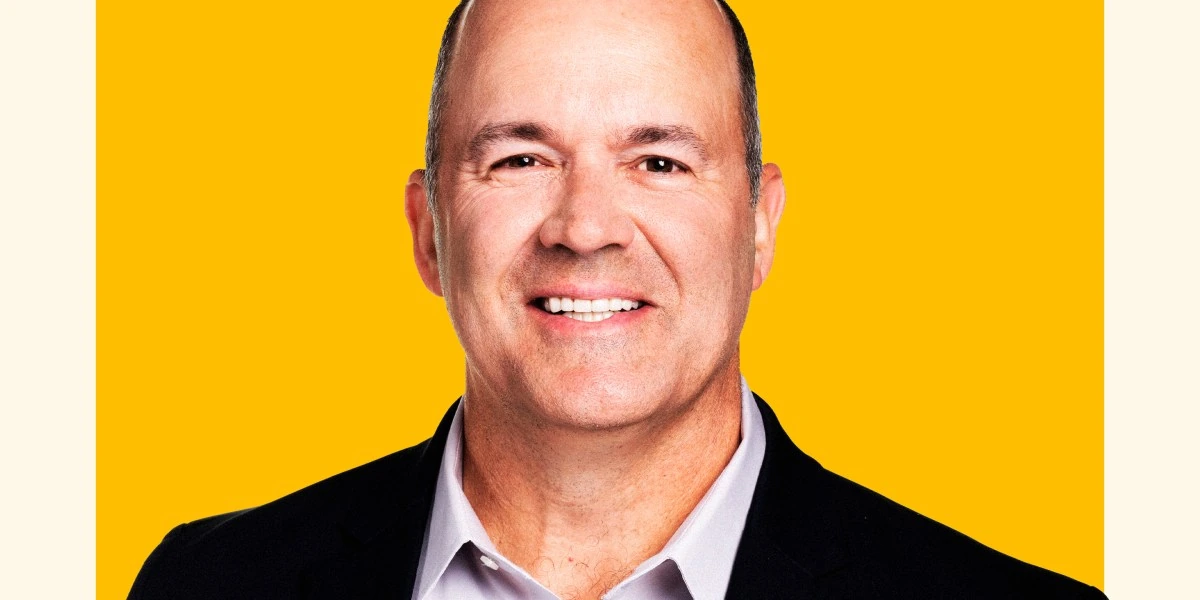
Which Matt Schroeder are we talking about?

The name Matt Schroeder is genuinely common, and any honest net-worth discussion has to start by locking down the right person. A quick look at public records turns up at least four distinct professionals using that name: the Rite Aid executive, a VP at Stellar Industries in Iowa (profiled on their company blog as a beekeeper and first responder alongside his supply chain role), a Dallas-based investor connected to WSI who oversees a portfolio described as exceeding 13 million square feet of industrial assets, and a Chicago-area professional associated with a lighting design firm called The Cosine. There are more beyond those.
The identity anchors that distinguish the Rite Aid Matt Schroeder are specific and verifiable. He holds an accounting degree from Indiana University of Pennsylvania, began his career as an audit manager at Arthur Andersen LLP, [joined Rite Aid in 2000 as Vice President of Financial Accounting](https://www. sec. gov/Archives/edgar/data/84129/000134100419000180/ex99-1.
htm), was named Senior Vice President, Chief Accounting Officer and Treasurer in 2017, became CFO in 2019, and was appointed CEO on September 2, 2024. He also serves on the board of directors of Whitaker Center for Science and Arts, a Harrisburg, Pennsylvania nonprofit. Those details collectively make him the Matt Schroeder most relevant to a net-worth query, and they allow you to confirm you're pulling the right SEC filings rather than attributing another person's assets to him.
The same discipline applies to sibling profiles on this site: figures like Taber Schroeder or Wil Schroter each require the same disambiguation process before any financial estimate is attached.
What net worth actually means and how estimates get built
Net worth is assets minus liabilities. That sounds simple, but the hard part is that most of the relevant data for a private individual, even a public company executive, is never fully disclosed.
On the asset side, the most accessible sources for a named executive officer (NEO) are SEC proxy statements (which disclose base salary, annual incentive targets, and equity award structures), Form 4 filings (which track changes in beneficial ownership of company securities in near real time), and Form 3 filings (initial ownership statement when someone becomes an insider).
On the liability side, there is almost nothing in the public record unless the person has disclosed a mortgage through a property filing, a personal guarantee in a court document, or similar. That asymmetry is why net-worth estimates for executives often skew optimistically: assets get documented, liabilities largely do not.
Third-party aggregator sites compound this problem by pulling salary figures, assuming they accumulate linearly over years, and ignoring taxes, spending, investment losses, and debt service. Credible estimates anchor to confirmed compensation periods, account for equity vesting schedules and the market value of shares at vesting, and carry an explicit margin of uncertainty. That's the approach used here.
Career trajectory and income sources

Matt Schroeder's income story is the story of a finance-track executive who climbed steadily through one company over more than two decades. Starting in 2000 as VP of Financial Accounting at Rite Aid, he moved through group VP roles covering strategy, investor relations, and the treasury function before being elevated to Senior Vice President, Chief Accounting Officer and Treasurer in 2017. He became CFO in 2019, a role that typically carries a base salary in the $700,000 to $1.
2 million range at a large public retailer, plus annual cash incentives and equity awards. Prior to Rite Aid he was an audit manager at Arthur Andersen LLP, a credential that placed him in a highly compensated professional services track before that firm dissolved.
The CEO appointment in September 2024, following Rite Aid's Chapter 11 bankruptcy exit, is significant for the net-worth picture in two directions. On one hand, it represents a compensation step-up: CEO packages at companies of Rite Aid's scale typically include higher base salaries, more substantial annual incentive targets, and larger long-term equity grants. On the other hand, Rite Aid emerged from bankruptcy as a restructured entity under the name New Rite Aid, LLC, which means equity granted prior to the bankruptcy filing was largely wiped out in the restructuring. Any equity-based wealth accumulated during the pre-bankruptcy period would need to be evaluated carefully: shares of the old Rite Aid Corporation (ticker RAD) became essentially worthless, so insider equity holdings from that period did not convert to retained wealth in the ordinary sense.
Post-bankruptcy, new equity awards under the restructured entity would form the forward-looking component of equity-based compensation. Those grants are typically disclosed in filings with the SEC or in the restructuring plan documents, though the timeline for those disclosures to accumulate into a meaningful verified record is still relatively short as of May 2026.
It's also worth noting that a separate Matt Schroeder appears on the Spotless Brands team page with CFO-level responsibility. This is a different individual and should not be used when estimating the Rite Aid CEO's finances, though it is a useful reminder that role-level titles like CFO do not uniquely identify a person.
Assets: what can actually be documented
For the Rite Aid Matt Schroeder, the documentable asset categories are narrow but real. Form 4 filings under the name 'Schroeder Matt' tied to Rite Aid (and now New Rite Aid, LLC) are indexed on SEC EDGAR and represent the most direct evidence of securities holdings. These filings record transactions in company stock, including grants, vestings, dispositions, and open-market purchases or sales. A third-party SEC aggregator (WhaleWisdom) has surfaced at least one Form 4 transaction from 2023 tied to RAD securities, but the most reliable data comes from pulling the filings directly from SEC EDGAR rather than from any wrapper site.
Beyond company equity, the public record does not yield documented evidence of real estate holdings, private investment stakes, or other significant asset categories for this individual. No property records have surfaced publicly through major aggregators, and no business ownership outside of Rite Aid's corporate structure appears in available records. His board role at Whitaker Center for Science and Arts is a nonprofit, which carries no equity value. This does not mean those assets don't exist; it means they are not verifiable through public sources as of this writing.
In practical terms, the most defensible asset components to include in a net-worth estimate are: accumulated compensation (net of taxes and estimated living expenses across a multi-decade career), any vested and retained equity from Rite Aid prior to the bankruptcy (likely minimal given equity wipeout), and new equity awards under the restructured entity (value uncertain and early-stage). That framework produces the $3 million to $8 million estimate cited above, with the higher end reflecting stronger-than-average retention of compensation over the career arc and the lower end reflecting post-bankruptcy equity losses and the cost of living in a major metro area over 25-plus years.
Liabilities and why the number is genuinely uncertain

The liability side of any executive's net-worth equation is where estimates most often fall apart. Personal mortgages, car loans, investment margin accounts, personal guarantees on business obligations, private credit lines, and deferred tax liabilities on vested equity are all real and common, but none are systematically disclosed for executives unless they appear in court filings, property records, or explicit SEC disclosures (which is rare). For Matt Schroeder specifically, no public liability disclosures have been located.
The Rite Aid bankruptcy context adds a layer worth mentioning. As CFO during the period leading into the Chapter 11 filing (Rite Aid filed in October 2023), Schroeder was a named executive officer during a period of significant corporate financial stress. An SEC-hosted comment PDF referencing [“Matt Schroeder, Executive Vice Preside”](https://www. sec.
gov/comments/s7-08-20/s70820-7677512-222649. pdf) is publicly accessible and provides additional context around the Rite Aid executive in that period. While there is no public evidence of personal liability arising from that process, it's a factor that any rigorous estimate should acknowledge: corporate bankruptcy proceedings can occasionally produce personal financial complications for officers, particularly if creditors pursue litigation or if personal guarantees exist. Nothing in the available public record suggests that happened here, but it's an honest caveat.
Estimates also vary across sites because different researchers use different base-salary assumptions, different equity vesting timelines, and different liability haircuts. A site that simply multiplies a salary figure by years of employment will produce a very different number than one that accounts for equity wipeouts, taxes, and lifestyle costs. That is the core reason you see wildly inconsistent figures for the same person across aggregator sites.
How to verify and update this figure yourself today
Here is a practical workflow you can run right now to check the current state of the evidence:
- Go to SEC EDGAR full-text search (efts.sec.gov) and search for 'Matt Schroeder' filtered to issuer 'Rite Aid' or 'New Rite Aid.' Pull any Form 3, Form 4, or Form 5 filings. Each filing will show the number of shares held, the nature of the transaction (grant, vesting, sale), and the date. These are the most reliable asset disclosures available.
- Search SEC EDGAR for Rite Aid proxy statements (DEF 14A filings) from 2019 through the most recent available. The named executive compensation tables will show Schroeder's base salary, annual incentive payouts, and equity award grant-date fair values for each year he appears as a named executive officer.
- Check the SEC EDGAR filing index for 'Schroeder Matt' as a filer (not just a reference). This surfaces the Form 4 history directly and is more complete than third-party aggregators.
- Search Rite Aid's restructuring plan documents (filed in the Delaware bankruptcy court, case number 23-18993) for any compensation disclosures related to executive officers post-emergence. These documents sometimes contain retention pay packages, new equity grant structures, and CEO compensation terms that predate formal SEC proxy disclosure.
- Run a property records search in the counties associated with Camp Hill or Harrisburg, Pennsylvania (where Rite Aid is headquartered) using county assessor databases or a public records aggregator. If a mortgage or deed of trust appears, that adds a liability data point.
- Cross-check any figure you find on a third-party net-worth site against what the SEC documents actually show. If the site does not cite a proxy statement or Form 4 filing, treat the number with significant skepticism.
For timeline context: compensation disclosed in a proxy statement reflects the prior fiscal year, so a 2025 proxy (if filed) covers fiscal year 2024 compensation. Equity awards vest over time, typically three to four years, so the full value of a grant made in 2024 may not be fully realized until 2027 or 2028. Keep that lag in mind when interpreting any figure.
Red flags and credibility checklist
Before you trust any Matt Schroeder net-worth figure you encounter online, run it through these checks: If you are specifically looking up the Rite Aid CEO, this estimate is the basis for discussions of Matt Schroeder net worth.
- Does the source specify which Matt Schroeder it covers? If it only says 'Matt Schroeder' with no employer, location, or role identifier, the figure may be for the wrong person entirely.
- Does the source cite a proxy statement, Form 4, or other SEC filing? If the only sourcing is 'estimated by our team' or a salary aggregator like Glassdoor, the number is not grounded in verifiable primary data.
- Does the figure account for the Rite Aid bankruptcy and equity restructuring? Any estimate that includes pre-2023 equity holdings as if they retained full value is almost certainly overstated.
- Is the figure suspiciously round or suspiciously large? Figures like '$50 million' for a career corporate executive at a struggling retailer are implausible without documented equity, real estate, or outside business ownership to support them.
- Does the source distinguish between gross compensation (what was awarded) and net retained wealth (what remained after taxes, spending, and investment outcomes)? Conflating those two produces major overestimates.
- Is the date of the estimate clearly stated? A figure calculated before the September 2024 CEO appointment may not reflect his updated compensation structure.
- Does the source acknowledge uncertainty explicitly? Any site that presents a net-worth figure for a private individual without a confidence range or an 'estimate' label is overstating its precision.
Where the estimate stands as of May 2026
Pulling the available evidence together: Matt Schroeder (Rite Aid CEO, IUP accounting graduate, former Arthur Andersen audit manager) has spent more than 25 years in finance leadership at a major public company, with a compensation trajectory consistent with accumulated personal wealth in the low-to-mid single-digit millions. This discussion of Cambrie Schroder's net worth follows a similar approach, using publicly available disclosures to narrow down what can and cannot be verified Cambrie Schroder net worth. The most significant variable, his equity position in the restructured New Rite Aid, LLC, is not yet fully documentable through public filings as of this writing. Pre-bankruptcy Rite Aid equity was largely extinguished in the Chapter 11 process, so the net-worth clock for equity-based wealth effectively restarted in late 2023 or early 2024.
The $3 million to $8 million estimate represents a reasonable range given publicly verifiable compensation history, the equity restructuring context, and the absence of documented outside assets. It should be treated as an informed estimate, not a confirmed figure. For readers searching for Wolfgang Schroeter net worth, the key is verifying the person and then relying on primary filings rather than relying on aggregator totals net-worth.
As New Rite Aid files additional SEC documents, as Form 4 disclosures accumulate, and as any proxy statement covering the post-emergence period becomes available, the evidential basis for updating this figure will improve. If you are primarily after alex schroeder net worth numbers from other sources, use the workflow above to verify what is actually documented and what is speculation.
Check SEC EDGAR's filing index for 'Schroeder Matt' periodically: that is your most reliable early-warning system for any material change in documented holdings.
FAQ
How can I be sure the “Matt Schroeder” in a net-worth article is the Rite Aid CEO and not one of the other people with the same name?
Use SEC disambiguation, not just title. Confirm the filing subject matches “Schroeder Matt” tied to Rite Aid or New Rite Aid, LLC, and cross-check against his board role listed in SEC-related nonprofit disclosures or company materials. If the Form 4 company name, ticker, or insider ID does not align with Rite Aid/New Rite Aid, do not apply the CEO’s net-worth estimate to that person.
Why do some sites give wildly different Matt Schroeder net worth numbers even when they cite salary?
They often treat cash compensation as if it is retained wealth. A credible estimate subtracts taxes, estimates routine living expenses, and adjusts for equity wipeouts from the bankruptcy restructuring, so two people using the same salary can still end up with very different net-worth ranges.
What is the biggest “missing data” piece that prevents a verified net worth for the Rite Aid CEO?
Liabilities. Public filings usually show equity transactions and pay structures, but personal debts like mortgages, margin loans, personal guarantees, and tax-deferred liabilities are rarely disclosed. Without those, the estimate can only be a range, not a precise accounting-grade number.
How should I interpret equity value after Rite Aid’s Chapter 11 exit, since he became CEO of New Rite Aid?
Treat pre-bankruptcy equity (old Rite Aid, RAD) as largely non-convertible for retained wealth, because the restructuring commonly extinguished it. For net-worth purposes, the more relevant and typically better-grounded component is any later equity awarded by or under New Rite Aid, but those records may still be sparse early on.
If a Form 4 shows a sale of shares, does that automatically mean his net worth went up?
Not necessarily. A sale could be to cover taxes, diversification, or debt servicing, and the public record usually does not reveal how proceeds were used. Also, if the market price moved or shares were partially vested, the sale timing can change what that transaction implies about net worth.
How often should I check SEC EDGAR for “Schroeder Matt” to keep an estimate current?
Run a periodic check, for example quarterly, because Form 4s are triggered by material equity transactions. Focus on newly filed Form 4 entries after late 2023 and especially after his CEO appointment, since those tend to be when post-bankruptcy equity activity becomes more visible.
Can I include “total compensation” from proxies directly into net worth calculations?
You should not add it directly. Proxies reflect gross pay for a prior fiscal year, and net worth depends on what was retained after taxes and spending. If you are converting compensation to assets, you need an explicit retention and timing assumption, and you should reflect the equity vesting lag rather than treating pay as instantly realized wealth.
Does the board membership at a science and arts nonprofit affect his net worth estimate?
Usually not in a directly calculable way. Board service at a nonprofit typically does not create equity value, and any compensation is often minimal or not the kind that reliably translates to investable assets. The more useful signals remain SEC filings tied to securities holdings.
What would count as “verified outside assets” for this type of net-worth research?
You would need concrete public evidence such as documented real-estate filings that show ownership, court records that establish specific financial obligations, or credible disclosure of private investment interests. The absence of those records in major public sources does not prove they do not exist, but it limits what can be treated as verified.
Is it reasonable to treat the $3 million to $8 million estimate as a stable figure over time?
No, it is a range tied to evolving filings and market conditions. New equity awards, vesting milestones, and any Form 4 transactions can shift the documented asset side, while interest rates and personal debt arrangements can shift liabilities. Update the range when new proxy or Form 4 evidence appears for the post-emergence period.
Texas Paul Schroeder Net Worth: Updated, Sourced Profile
Disambiguates Texas Paul Schroeder, then details updated, sourced net worth figures, sources, dates, and verification ti