
Tom Scholz's net worth, as of March 2026, is most credibly estimated somewhere in the $30 million to $60 million range, depending on which income streams and assets are factored in. If you are specifically looking for Will Shortz's net worth, that is a separate figure with its own sources and estimates. No confirmed, publicly disclosed figure exists because Scholz is a private individual with no publicly traded holdings or mandated financial disclosures. What you'll find online is a wide spread of estimates from celebrity wealth sites, and most of those numbers are worth treating with real skepticism. Here's what the evidence actually supports and why the numbers vary so dramatically.
Tom Scholz Net Worth: How Estimates Are Built and Verified

Marcus Rothstein
27 Mar 2026

Who Tom Scholz is and why people ask about his money

Tom Scholz is the founder, guitarist, and primary creative force behind the rock band Boston. He co-founded the band in the early 1970s, and Boston's 1976 debut album became one of the best-selling debut albums in rock history. Scholz wrote and produced 'More Than a Feeling,' the 1976 single that remains one of the most-played classic rock tracks of all time. That writing and production credit is significant because it means Scholz holds both songwriter royalties and producer-side value on a catalog that has been generating revenue continuously since 1976.
Beyond music, Scholz is an engineer and inventor. He holds a master's degree from MIT and founded Scholz Research & Development, Inc. after Boston's early commercial success. That company developed the Rockman brand of guitar amplifiers and effects units, products that became widely used in the 1980s and are still referenced today. His dual career as a musician and a commercialized inventor is part of why his wealth profile is more complex than a typical rock musician's, and why people searching for his net worth often get confused by wildly different numbers.
What the estimates actually say and how they differ
The published estimates for Tom Scholz's net worth in 2025 and 2026 range from about $24.6 million on the low end to $120 million on the high end. That is a massive spread, and it signals immediately that these numbers are not being derived from the same methodology or the same data sources.
| Source | Estimate | Year | Methodology Notes |
|---|---|---|---|
| PeopleAI | $24.6 million | Feb 2026 | Model using social/influence signals; explicitly self-described as an estimate, not financial reporting |
| RichestLifestyle.com | ~$32 million | 2025 | Catalog/royalty-informed estimate; methodology not fully detailed |
| Gracejabbaribio.com | $58 million | 2026 | Annual table ($48M in 2022 through $58M in 2026); cites royalty income as driver |
| CelebsMoney | $120 million | 2026 | Single headline figure; no detailed methodology visible in public snippet |
The PeopleAI figure is the easiest to contextualize because the site explicitly discloses its methodology: it is a model built on social and influence signals (Google search volume, Wikipedia traffic, YouTube, social media) rather than primary financial reporting. The site's own disclaimer says the figure 'is just estimation based on publicly available information... not accurate.' That is a meaningful caveat. The CelebsMoney $120 million figure sits at the other extreme and provides no visible breakdown in its publicly accessible excerpt, which makes it very difficult to evaluate. The Gracejabbaribio.com table, which tracks year-over-year values from $48 million in 2022 to $58 million in 2026, at least frames its logic around royalty income consistency, which is the most defensible general argument for Scholz's wealth. The RichestLifestyle.com figure of around $32 million lands in a middle range that is also plausible given what can be inferred from catalog activity and business holdings.
One additional data point worth flagging: QuiverQuant, an insider-tracking financial site, shows a net worth estimate of at least $36.1 million as of March 11, 2026, but this appears to be for a 'Thomas J. Schuetz,' not Tom Scholz the musician. This is a good example of name-collision risk in celebrity wealth searches, where similar names on different pages can contaminate estimates if you are not careful about what you are actually reading.
Where the money actually comes from
Boston's catalog and royalties
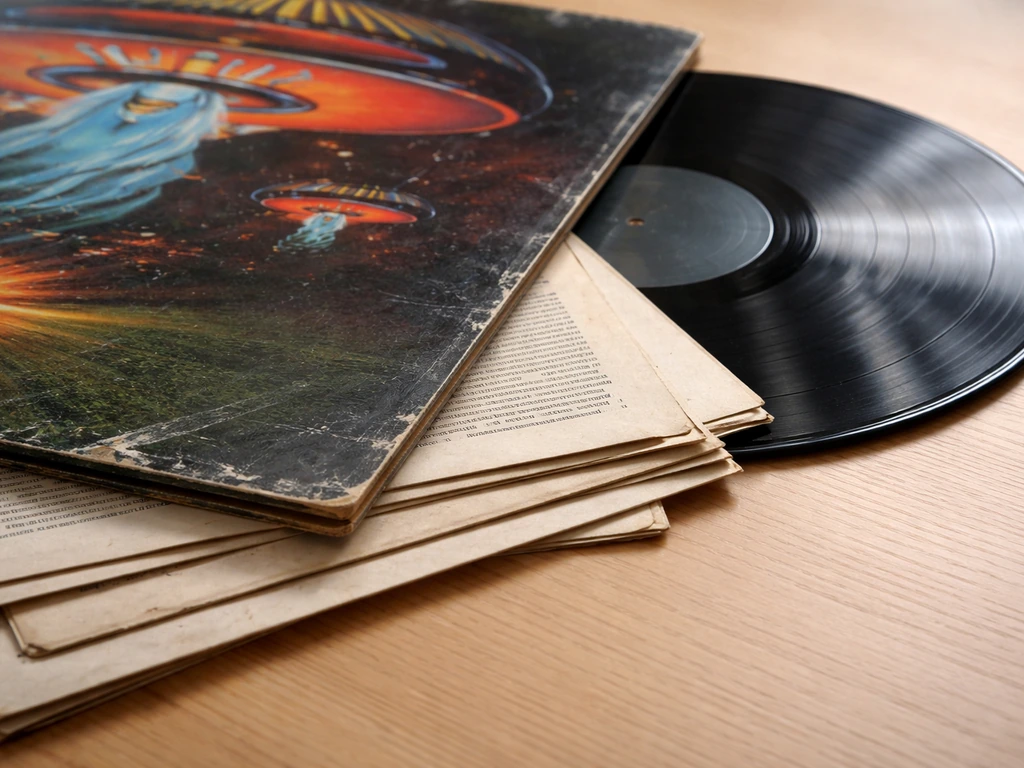
The most documented and durable income source for Scholz is his royalty position in Boston's catalog. As the primary songwriter on the band's debut and subsequent albums, he holds publishing and songwriting royalties on tracks that have been licensed continuously for nearly 50 years. 'More Than a Feeling' alone has accumulated enormous streaming, radio, and sync licensing activity. Sync licensing, meaning placements in TV shows, films, and commercials, is particularly valuable for a track of that profile because each placement generates a licensing fee that flows partly back to the songwriter and publisher. The Gracejabbaribio.com estimate specifically lists 'licensing for movies, TV, and commercials' and 'publishing rights and songwriting credits' as income drivers, and that framing is consistent with how classic rock catalog economics actually work. Scholz's full financial picture as Boston's co-founder is inseparable from the band's catalog value, which has appreciated significantly as streaming platforms have revived classic rock royalty flows.
Rockman and invention-related income
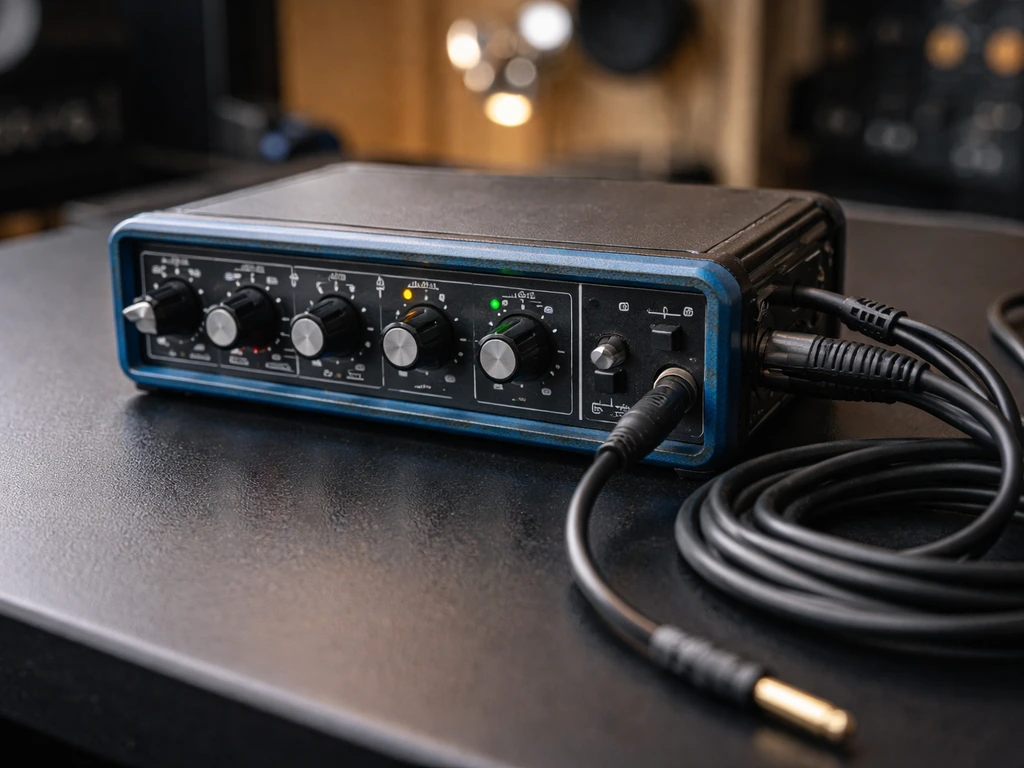
Scholz founded Scholz Research & Development, Inc. and developed the Rockman brand of headphone amplifiers and effects units. These products were commercially successful in the 1980s, and Scholz's patent wording is tied directly to the Rockman compression concept, evidence that this is patent-linked commercialization rather than a purely biographical talking point. Scholz was featured in Inventors Digest as recently as May 2025, which confirms that his identity as an active inventor and patent holder is still recognized in that professional space. While the current revenue from Rockman-related IP is not publicly quantified, the existence of a patent portfolio and a commercial product line with documented market history supports the idea that net worth estimates may legitimately include IP-related value beyond what royalty-only estimates would capture.
Streaming and digital platform revenue
Streaming has materially changed the royalty economics of legacy rock catalogs. Tracks that once generated income only through physical sales and radio play now accumulate per-stream royalties from Spotify, Apple Music, Amazon Music, and similar platforms. For a catalog as heavily rotated as Boston's, the annual streaming volumes are substantial. This revenue is typically split between the master recording owner (which may or may not be Scholz, depending on deal structure) and the publisher/songwriter. Scholz's songwriter credit on 'More Than a Feeling' and other Boston tracks means he participates in performance royalties regardless of who owns the master.
Assets and holdings that shape the estimates
Because Scholz is a private individual, there are no mandatory financial disclosures, no SEC filings, and no public ownership records for most of his holdings. What can be reasonably inferred from publicly available biographical information includes: his interest in Boston's publishing and songwriting catalog, the Scholz Research & Development, Inc. entity and associated IP, any personal real estate holdings (not publicly documented in detail), and potential historical earnings from touring and album sales over nearly five decades. The catalog and IP holdings are the most likely dominant components of any credible estimate in the $30 million to $60 million range because they represent income-generating assets with long, documented histories, rather than speculative future value.
One thing worth noting is that illiquid assets, like a private company stake, a patent portfolio, or a share of a music catalog that has not been sold, are genuinely difficult to value. Catalog valuations have fluctuated significantly in recent years as interest rates and investor appetite for music IP have shifted. A catalog worth $X in 2021 when music IP was selling at peak multiples may be valued quite differently in 2026. This is part of why the same individual's net worth estimate can look very different on different websites even when they are ostensibly working from the same income stream logic.
How net worth is actually calculated
Net worth is assets minus liabilities. That's the formula, and it applies whether you are calculating it for Tom Scholz or anyone else. Assets include everything of value: bank accounts, investments, real estate, ownership stakes in companies, IP portfolios, vehicles, and collectibles. Liabilities include mortgages, loans, and any other outstanding debts. The result is the net figure.
The complications arise in how you value illiquid assets. A music catalog, for example, is typically valued using a multiple of annual net publisher's share (NPS), which is the royalty income the publisher receives after collection society fees. In recent years, catalog multiples have ranged from roughly 15x to 30x annual NPS for high-profile classic rock, though the market has cooled from peak 2021 levels. A patent portfolio or a private company is even harder to value without an arm's-length transaction or an appraisal. Net worth estimates on celebrity sites rarely do this math explicitly; they tend to work backward from assumed income levels or forward from comparable artist benchmarks, neither of which is particularly rigorous.
Debt is almost never factored into celebrity net worth estimates because it is not publicly disclosed. This means most published figures are effectively gross asset estimates rather than true net worth. Keep that in mind when comparing numbers across sources.
How to verify the numbers yourself

There is no single authoritative source you can check for Tom Scholz's net worth because he has never been required to disclose it. That said, here is how to sanity-check what you find online.
- Check the source's methodology disclosure. PeopleAI explicitly says its figures are influence-signal models, not financial reporting. CelebsMoney provides no visible breakdown. Any site that doesn't explain how it arrived at a number should be treated as a rough guess, not a researched estimate.
- Cross-reference multiple mid-tier estimates. When RichestLifestyle.com, Gracejabbaribio.com, and similarly structured sites cluster around $32 million to $58 million, that range is more defensible than a single $120 million outlier with no methodology.
- Look for catalog-related reporting. Trade publications like Billboard, Music Business Worldwide, and Variety report on catalog acquisitions and royalty trends. If Boston's catalog is ever sold or a deal is disclosed, that transaction would anchor a much more concrete valuation.
- Search for interviews and legal proceedings. Scholz has been involved in legal disputes related to Boston over the years. Court documents and settlement reporting can sometimes surface financial context that does not appear in entertainment media.
- Use USPTO and patent databases. The US Patent and Trademark Office's public search tool lets you look up patents assigned to Tom Scholz or Scholz Research & Development, Inc., which can at least confirm the existence and scope of his IP portfolio even if it cannot value it.
- Avoid sites that recycle each other's figures. A large portion of celebrity net worth content on the web is scraped or paraphrased from a small number of original estimates. Finding five sites that all say $120 million does not mean the figure is confirmed; it may mean they all copied the same original source.
How Scholz's wealth has likely evolved over time
Scholz's financial trajectory maps fairly cleanly onto three phases. The first phase runs from 1976 through the early 1980s, when Boston's debut album and its follow-up 'Don't Look Back' (1978) generated enormous commercial returns. The debut album alone sold over 17 million copies in the United States, which translated to both direct earnings and the establishment of a royalty-generating catalog that would compound in value over time.
The second phase covers the 1980s and 1990s, when Scholz was simultaneously managing Boston's intermittent activity and building Scholz Research & Development. The Rockman product line hit the market in the early 1980s and became a significant commercial product, used by professional musicians and amateurs alike. The eventual sale or licensing of Rockman technology added a separate business value layer to his wealth profile, though the specific financial terms of any transactions involving that company have not been publicly disclosed in detail.
The third phase, from roughly 2000 onward through today, is characterized by catalog appreciation driven by streaming growth and the broader surge in music IP valuations. The classic rock catalog market peaked dramatically around 2021 and 2022 before cooling. Scholz's catalog, anchored by 'More Than a Feeling' and other Boston tracks, would have been carried upward in that tide even if he did not sell. The Gracejabbaribio.com year-over-year table showing growth from $48 million in 2022 to $58 million in 2026 tracks loosely with this narrative, though the underlying numbers remain estimated rather than confirmed.
Myths and inflated claims worth ignoring
The $120 million figure from CelebsMoney is the most prominent outlier in current search results. Without a published methodology, there is no way to evaluate what assumptions produce that number. It could reflect a peak catalog valuation multiple applied to estimated royalty income, or it could simply be an unchecked legacy figure that has not been updated. Either way, it sits well outside the cluster of other estimates and should be treated as a maximum-scenario guess rather than a researched figure.
The PeopleAI $24.6 million figure is at the other extreme, and the site itself tells you not to treat it as accurate financial reporting. Influence-signal models are useful for gauging relative public interest in a figure, but they are not substitutes for catalog valuation, business appraisal, or asset accounting. A musician who stopped posting on Instagram would look 'poorer' in that model even if their catalog was generating millions annually.
Another common misleading claim is that Scholz's wealth is primarily or exclusively tied to performance income, meaning touring and live shows. That significantly undervalues the royalty and IP dimensions of his wealth. For a classic rock songwriter who has been collecting publishing and performance royalties on a top-10 hit for nearly 50 years, the catalog income almost certainly exceeds anything generated by touring. How other musicians in this category build wealth through catalog assets follows a similar pattern: touring revenue matters less over time, while IP and publishing income compounds.
Finally, watch out for name confusion in search results. As the QuiverQuant example illustrates, a 'Thomas Schuetz' net worth figure can surface in a Tom Scholz search context if aggregators or search engines are not careful with disambiguation. Always confirm you are reading about the right person before accepting a figure.
The most defensible number and what it really means
The most defensible estimate for Tom Scholz's net worth as of early 2026 falls in the $30 million to $60 million range. The lower bound reflects conservative assumptions about catalog value and minimal credit for private business holdings. The upper bound reflects a more generous but still plausible catalog multiple applied to a well-documented, heavily licensed song portfolio, plus IP from Scholz Research & Development. The $120 million figure is possible in the most optimistic scenario but is not supported by any disclosed transaction or appraisal. The sub-$25 million figure almost certainly underweights the royalty catalog's standalone value.
For readers who want to stay current on where this estimate goes next, the most meaningful signals to watch are: any reported catalog sale or licensing deal involving Boston's music, any patent assignment or IP transaction involving Scholz Research & Development, and broader music catalog market conditions as reported in trade publications. If Scholz ever sells a portion of his catalog, as many classic rock artists have done in recent years, that transaction would provide the clearest public anchor for a credible net worth figure. Until then, the honest answer is that we are working with informed estimates, not confirmed valuations, and the range matters more than any single number. If you are trying to pin down Tom Scholz's net worth, the same range of evidence and methodology applies to how credible sites arrive at a specific dollar figure for him.
FAQ
How can I tell whether a net worth number I find online is actually for the right person (Tom Scholz vs someone with a similar name)?
Check the biography signals in the same page or snippet, for example references to Boston, MIT, or the Rockman brand. Also confirm the photo and middle initial if shown, because some aggregators can mix “Thomas Schuetz” or other similar names into results for “Tom Scholz,” which produces misleading figures.
Why do some celebrity net worth sites publish a single number instead of a net worth range?
Many of these sites present a point estimate by picking one royalty assumption and one asset valuation multiple for illiquid holdings (like catalog IP). Without disclosed methodology or transaction comparables, that single number is effectively a guess, not a calculation you can verify.
Does Tom Scholz’s net worth depend more on royalties, or on ownership of the master recordings?
The safest view is that royalties and publishing credits are central, because songwriting participation drives ongoing collection. However, the master recording ownership split can materially change outcomes, since master rights determine performance, streaming, and some licensing revenue flows. If Scholz does not own the masters directly, his income would rely more heavily on publishing and songwriter shares.
What does “catalog valuation” mean in practice, and why does it swing so much year to year?
It is usually a multiple-based estimate of annual royalty earnings (often using a net publisher share concept) applied to the catalog. Those multiples move with interest rates, investor appetite for music IP, and deal liquidity, so the same catalog can be valued very differently in different market cycles.
If I only see “net worth” numbers, how should I treat missing debt or liabilities?
Treat them as mostly gross asset estimates. Because outstanding mortgages, loans, and other liabilities are not publicly itemized for private individuals like Scholz, most published net worth figures do not subtract debt the way a formal accounting would.
Could Scholz’s Rockman invention and patents significantly raise the net worth estimate, even if revenue is not public?
Yes, in principle, because patent-linked products and an IP portfolio can have value even without transparent earnings. But since there is rarely an arm’s-length transaction publicly tied to those patents, valuation often becomes speculative, so you will see wider variation among sites that include different levels of IP credit.
Do performance royalties from touring and live shows really matter for someone like Scholz compared with catalog income?
For a long-running hit songwriter, touring income usually matters most short term, while catalog-related songwriter and licensing income compounds over decades. That does not mean touring is irrelevant, but it is typically not the dominant driver versus publishing and track-level licensing for a heavily reused classic-rock catalog.
What’s the best way to sanity-check whether an estimate is too high or too low?
Compare the implied catalog earnings to what is typical for a major evergreen classic rock catalog, then see whether the site’s figure would require unusually high royalty income or unusually high valuation multiples. If a number sits far outside the clustering of other estimates without a disclosed method or transaction anchor, it is more likely an outlier assumption.
If a site uses social media or search traffic to estimate net worth, how should I interpret that?
Treat it as a popularity-based proxy, not a financial model. Interest can move without income moving, so influence-signal models can mis-rank people by “visibility” rather than by underlying royalty streams, IP value, or liabilities.
If Scholz were to sell part of his Boston catalog, would that likely become the most reliable data point?
Yes. A disclosed sale or licensing transaction provides a market-clearing price and a clearer multiple to apply. Until then, most online figures rely on assumptions about annual royalty generation and valuation multiples, which is why the range remains wide.
Next Article
Will Shortz Net Worth: Best Estimates, Sources, and Facts
Will Shortz net worth estimate with sources, confirmed career facts, and why figures differ, plus how to verify updates.