
The most commonly cited estimate for Sam Schmidt's net worth as of early 2026 sits around $174 million, based on figures surfaced by aggregator sites like PeopleAI. That number should be treated as a rough estimate, not a confirmed valuation. There are no public filings, disclosed transaction prices, or court records that pin down an exact figure. What we do know from credible reporting is that Schmidt built significant equity through his motorsports team over roughly two decades, and that equity situation changed materially when McLaren completed a 100% buyout of the IndyCar outfit formerly known as Schmidt Peterson Motorsports. Understanding where that $174 million estimate comes from, and what's actually driving his wealth, requires walking through the full picture.
Sam Schmidt Net Worth: Estimates, Income Sources, Timeline

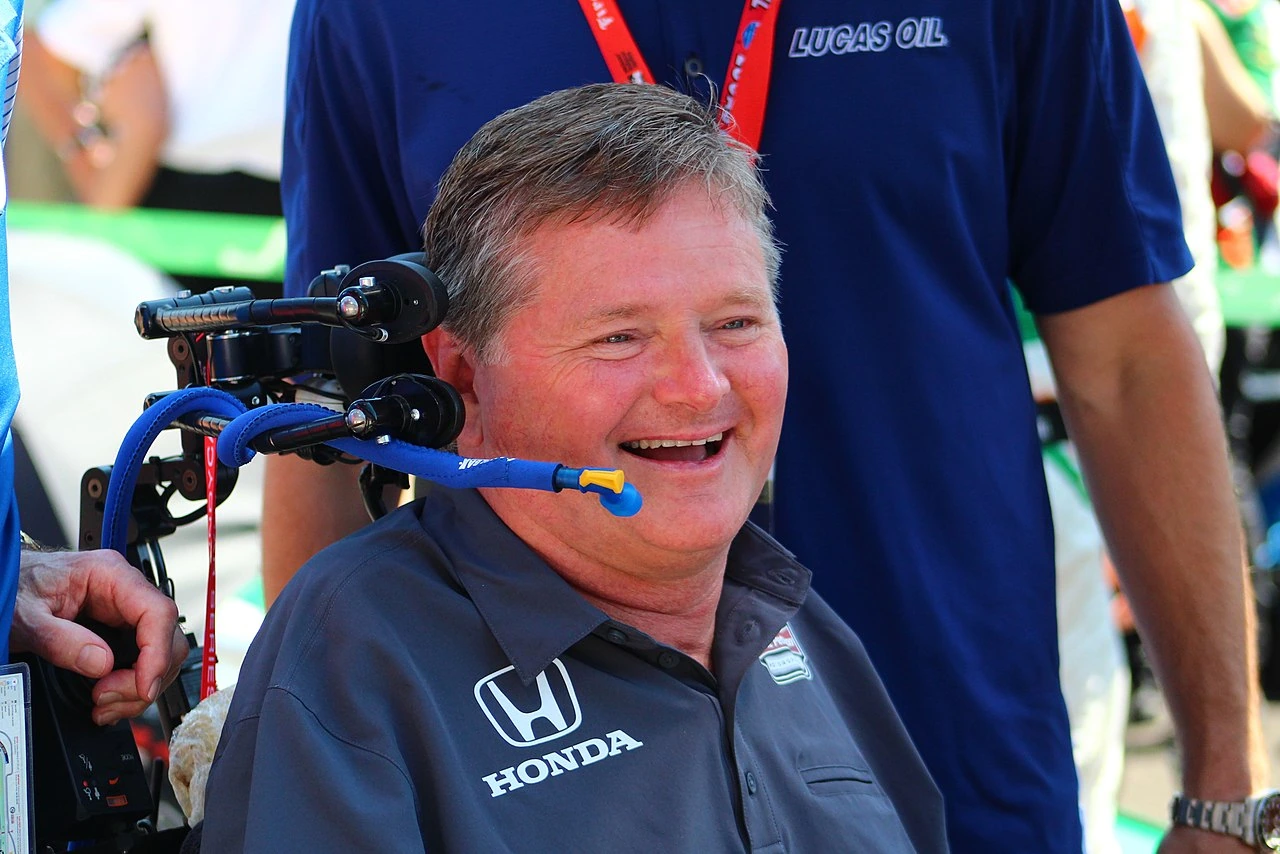
Who Sam Schmidt is

Sam Schmidt (born August 15, 1964) is a former Indy Racing League driver who became one of the more recognizable team owner figures in American open-wheel racing. He won his first IRL race at Las Vegas Motor Speedway in 1999, a hometown victory covered by ESPN at the time. In January 2000, he suffered a devastating spinal cord injury during a testing accident that left him paralyzed from the shoulders down. Rather than exit the sport, Schmidt came back as a team owner. About 14 months after his accident, he announced the formation of Sam Schmidt Motorsports, a move documented both by his team's official history and by Pepperdine's business school in a profile on his entrepreneurial arc.
Schmidt is also the founder of what is now Conquer Paralysis Now (originally the Sam Schmidt Paralysis Foundation, established in 2000), a nonprofit organization focused on spinal cord injury research. His memoir, "No Finish Line," published through Simon and Schuster in May 2026, ties all of these threads together: the racing career, the accident, the team ownership, and the foundation work. He is inducted into the Southern Nevada Sports Hall of Fame. When you search his name, you are almost certainly looking for this person specifically, not any of the other Sam Schmidts who appear in unrelated professional contexts.
The best available net worth estimates and how to read them
PeopleAI shows a figure of approximately $174 million for January 2026, and presents a year-by-year series running from 2022 through 2026. That kind of data point is useful as a directional reference, but sites like PeopleAI are aggregators that pull from secondary sources and apply their own modeling. They do not have access to Schmidt's brokerage accounts, private company valuations, or real estate records. So treat $174 million as a ballpark, not a certified audit. It is not obviously implausible given the scale of IndyCar team ownership and ancillary business interests, but it could just as easily be off by tens of millions in either direction.
Forbes has covered Schmidt's story and described his "small motorsports empire," which at least gives some credibility to the idea that his holdings were substantial. But Forbes has not published a specific verified net worth figure for him. For context on how wealth profiles like this are researched, it helps to look at comparable figures in the same space. If you explore profiles like the Schmidt net worth overview on this site, you will see that estimates for motorsports and business figures in this surname group vary widely and are generally sourced from the same set of aggregator sites rather than primary financial disclosures.
Where his money comes from
Racing career earnings

Schmidt's earnings as an active IRL driver were never publicly disclosed in detail. IndyCar prize money in the late 1990s was real but not at the level of, say, Formula 1 contracts. His 1999 Las Vegas win and competitive seasons would have generated race winnings and sponsor income, but this phase of his career was relatively short and is unlikely to account for more than a small fraction of whatever wealth he holds today. The bigger financial chapter is the team ownership era.
Sam Schmidt Motorsports and the partnership with Peterson
The core asset for most of Schmidt's financial story is the racing team he built. Sam Schmidt Motorsports eventually merged with Ric Peterson's operation to become Schmidt Peterson Motorsports. Running a competitive IndyCar team is expensive, as the Indianapolis Business Journal has noted in covering the financial realities of motorsports ownership. Revenue comes primarily from sponsorships, team licensing, prize money, and partner deals. A multi-car IndyCar operation with consistent sponsorship from brands like Arrow Electronics represents a real, operating business with meaningful annual revenue. The valuation of such a team for ownership purposes depends heavily on sponsorship contracts, infrastructure, and competitive track record.
The McLaren buyout and what it means financially
This is the single most important event for understanding Schmidt's current net worth picture. According to RACER's reporting, McLaren Racing completed a buyout that gave it 100% ownership of the IndyCar outfit (rebranded as Arrow McLaren SP and later Arrow McLaren). Motorsinside reports an agreement with McLaren that made it the majority shareholder with a 75% stake and blank" rel="noopener noreferrer">integrated Arrow McLaren SP into McLaren Racing. Sam Schmidt and Ric Peterson departed after the buyout was completed, with the farewell reported in early January 2025. Wikipedia's Arrow McLaren entry confirms that McLaren first purchased a 75% stake and later increased to full ownership. The practical implication: Schmidt almost certainly received a payout for his equity stake when McLaren bought him out. That liquidity event, whatever its size, would now be reflected in his post-sale holdings rather than active team equity. The exact transaction price was not publicly disclosed.
Assets and holdings worth tracking
Because Schmidt is a private individual (not a publicly traded company executive), there are no mandatory SEC disclosures of his personal assets. Here is what is worth looking for if you want to get closer to a real picture:
- Post-buyout cash and investment holdings: The McLaren transaction likely converted his team equity into liquid assets. How those are deployed (equities, private equity, real estate) is not public, but the starting point would be the buyout proceeds.
- Real estate: High-profile Nevada and motorsports-adjacent real estate purchases sometimes appear in county assessor records. Schmidt's Las Vegas ties, given his IRL win there and his foundation's roots, make Nevada property worth checking.
- Conquer Paralysis Now: This is a nonprofit, not a personal asset. However, Schmidt's association with it means some of his public profile and speaking/appearance income may be tied to CPN-related events. His daughter Savannah Boehrer is listed on the CPN board, showing this remains a family-connected organization.
- Memoir and intellectual property: "No Finish Line" is a published memoir through Simon and Schuster. Book advances and royalties from a title like this are real but modest compared to business-scale assets.
- Remaining motorsports interests: After the McLaren buyout, there is no confirmed reporting of Schmidt starting or owning a new racing team. Any new motorsports ventures would represent additional assets worth monitoring.
How his wealth has shifted over time

Looking at the rough timeline, Schmidt's financial trajectory breaks into a few clear phases. This kind of chronological view is consistent with how wealth builds (and changes) for motorsports figures, and it mirrors patterns you see when studying people like Justin Schmidt's net worth arc in business-focused profiles.
| Period | Key Event | Estimated Financial Impact |
|---|---|---|
| Late 1990s | Active IRL driving career, 1999 Las Vegas win | Modest race winnings and sponsorship; foundational reputation |
| 2000–2001 | Paralysis injury, formation of Sam Schmidt Motorsports | Transition from driver income to team-building investment phase |
| 2002–2015 | Team growth, multi-car IRL/IndyCar operation | Increasing team equity value as sponsorships and results built; Forbes noted 'motorsports empire' by 2014 |
| 2015–2023 | Schmidt Peterson Motorsports era, Arrow partnership | Peak equity value period; multi-year sponsor deals and competitive presence in IndyCar |
| 2024–2025 | McLaren completes 100% buyout; Schmidt and Peterson depart | Likely liquidity event converting team equity to cash/investments; active ownership ends |
| 2026 | Memoir published; post-ownership period | Residual income from IP, speaking, foundation work; wealth preserved from buyout proceeds |
The PeopleAI year-by-year series (2022 through 2026) does show some variation in its estimates, which could reflect the aggregator picking up news about the McLaren transaction. But these sites often lag real events by months and use opaque modeling, so the year-to-year changes in their numbers should not be over-interpreted.
Comparing Schmidt to peers in similar positions
It is useful to benchmark Schmidt's situation against other public figures who built wealth through entertainment, media, or business rather than a single salary. For instance, Holy Schmidt's net worth illustrates how media and brand-building income can compound over time differently than a transaction-based liquidity event. Schmidt's situation is more like a founder-exit story: a long period of equity building followed by a sale. That is structurally different from, say, Liv Schmidt's net worth, which is driven by ongoing content and brand revenue rather than a one-time buyout.
For other motorsports and entertainment crossover wealth profiles, the patterns tracked on pages like Jon Schmidt's net worth show how creative and performance-based incomes are valued very differently from operating business equity. And for a fictional but culturally relevant framing, the wealth dynamics satirized in profiles like Pewterschmidt net worth actually mirror some real methodological questions about how closely held wealth gets estimated. The common thread across all of these is that private wealth is inherently harder to pin down than public-company compensation.
What the numbers are based on, and where to be skeptical
The $174 million figure circulating on aggregator sites is almost certainly reverse-engineered from public reporting about the team's scale and the McLaren transaction, combined with assumptions about what IndyCar team equity is worth. No court filing, IRS record, or verified transaction disclosure confirms this number. IndyCar team valuations are not published, and McLaren has not disclosed what it paid for the remaining stake in Schmidt Peterson Motorsports.
What is confirmed: Schmidt was a co-owner of a multi-car IndyCar operation for over two decades. McLaren completed a full buyout. Schmidt departed the team in January 2025. He is no longer an active team principal in IndyCar. His foundation continues operating. These are the hard anchors. Everything built on top of those anchors, including specific dollar amounts, is an estimate.
When cross-referencing figures like this, the most reliable approach is to look for any disclosed transaction details in motorsports trade press (RACER, Motorsport.com, Autosport), check Nevada and Indiana property records for real estate, and search for any federal nonprofit filings tied to Conquer Paralysis Now that might show compensation or related-party transactions. If you want to dig further into how wealth profiles for Schmidt-surname figures are constructed and compared, exploring something like Walden Schmidt's net worth profile gives a good sense of the methodology this site applies consistently across similar subjects.
Your practical next steps for verification
- Check RACER and Autosport for any additional reporting on the McLaren-Schmidt buyout price or terms, which would be the single best anchor for a valuation.
- Search Nevada and Indiana county assessor databases for Schmidt-associated real estate, which would at least give partial asset confirmation.
- Pull Conquer Paralysis Now's Form 990 filings from the IRS nonprofit database (ProPublica Nonprofit Explorer is a good free tool) to see if Schmidt receives any compensation through the foundation.
- Cross-reference any net worth figure you find against at least two different aggregator sites and note whether they agree, since large discrepancies signal the number is modeled rather than sourced.
- For the memoir specifically, check publisher statements or book industry databases for any disclosed advance figures, though these are rarely made public.
Bottom line: Sam Schmidt is a credible high-net-worth individual based on two decades of IndyCar team ownership and the McLaren buyout that concluded in early 2025. The $174 million estimate is plausible but unverified. The most likely driver of his current wealth is the equity he received when McLaren completed its acquisition. Until transaction terms are disclosed or Schmidt's holdings appear in public records, any specific dollar figure should be held loosely.
FAQ
How can the PeopleAI-style net worth figure change from year to year if nothing new is publicly disclosed?
Aggregator year-by-year numbers can move because their models update assumptions about IndyCar team valuation, sponsor revenue ranges, or the implied size of the McLaren buyout, even when the transaction price itself is still undisclosed. Small changes in assumed equity value can swing a large “net worth” estimate by tens of millions.
Did Sam Schmidt personally get cash from McLaren’s 100% buyout, or could it have been a mix of payments?
It was likely some form of equity liquidation, but without disclosed terms you cannot assume it was all cash. Buyouts in private racing ownership deals are often structured as a combination of cash at closing, earn-outs tied to future performance, and sometimes vendor or employment arrangements that are not reported as “net worth” components.
If the buyout happened in 2025, why do estimates show meaningful amounts as far back as 2022?
Those earlier values are typically modeled based on the ongoing estimated value of the team equity rather than on confirmed financial statements. Because private-team valuations are inherently uncertain, the historical series is best treated as a directional indicator, not evidence of exact portfolio size at each date.
Could Schmidt still earn significant income after leaving the team, even if he no longer owned the IndyCar operation?
Yes, if he received post-sale consideration, holds minority stakes in related ventures, or earns from licensing, speaking engagements, or foundation-adjacent activities. The key limitation is that private-person compensation is not required to be disclosed publicly, so only specific public records or filings would narrow this down.
What’s the most practical way to verify whether real estate contributed to the net worth estimate?
Check county and state property records for Nevada and any other likely states where he has owned homes, then look for changes around the buyout period. A major asset sale or purchase can sometimes be inferred from deed transfers and recorded mortgages, which aggregators often ignore.
Are there any public nonprofit filings that can help estimate compensation connected to Conquer Paralysis Now?
Potentially. Federal nonprofit tax filings can sometimes reveal officer compensation ranges and certain related-party transactions. However, these forms usually show totals and categories, not a full picture of personal wealth, so they are better for bounding compensation than for confirming a net worth number.
How do I avoid confusing Sam Schmidt the team owner with other people named Sam Schmidt or similar names?
Use cross-checking signals like birth date, IndyCar ownership, the motorsports team history, and the foundation name (now Conquer Paralysis Now). Name-only searches often produce false matches, and many net worth pages incorrectly merge identities when people share the same surname and similar career keywords.
What would make a $174 million estimate clearly wrong, either too high or too low?
It would be too high if the implied buyout payout was far smaller than model assumptions, or if most wealth was tied up in illiquid equity that was not fully cashed out. It would be too low if he received substantial payout plus ongoing ownership in other ventures, or if real estate and investment holdings are significant but not reflected in aggregator modeling.
Is IndyCar team valuation the only factor driving net worth for someone like Schmidt?
No. Team valuations depend on revenue assumptions, sponsorship stability, and competitive results, but the final net worth estimate also depends on personal leverage (debt), how much equity he actually retained after partnerships and mergers, tax effects of the sale, and any subsequent investment performance. These components are rarely observable for private owners.
What is a realistic “next step” if I want a more reliable estimate than a single aggregator number?
Triangulate three areas: (1) any disclosed buyout-related details in motorsports trade coverage, (2) deed and mortgage records for major asset changes, and (3) any public nonprofit or foundation-related filings that mention compensation or related-party arrangements. If you cannot find transaction terms or asset transfers, treat any specific net worth figure as speculative.
Walden Schmidt Net Worth: Estimate, Sources, and Breakdown
Walden Schmidt net worth estimate with evidence breakdown, sources, confirmed data vs third-party claims, and how to ver