
If you searched "trucking with schmidt net worth" and landed here, here is the short answer: no verified, publicly filed net-worth figure exists for the person behind Trucking With Schmidt. What does exist is a collection of public signals you can use to build a reasoned estimate range, as long as you are honest about what is confirmed versus what is inferred. This guide walks you through exactly that process. This guide walks you through exactly that process, which is similar to how you would approach researching Eric Schmidt net worth when only public signals are available.
Trucking with Schmidt Net Worth: How to Estimate It

Marcus Rothstein
27 Mar 2026

Which Schmidt are we actually talking about?

The "Schmidt" behind Trucking With Schmidt is Kurt Schmidt, an owner-operator trucker based in Mapleton, Iowa (P.O. Box 202, Mapleton, IA 51034). Kurt and his wife Sarah have two children, Paige and Troy. He started documenting his trucking life on YouTube under the handle @truckingwithschmidt7120, and the channel was created on October 17, 2012. According to his own site, he originally drove a 1986 Freightliner before upgrading to a 1999 Kenworth W900, and he formalized his operation as Schmidt Family Trucking.
This is a very different subject from the high-profile Schmidts tracked elsewhere on this site. If you are researching <a data-article-id="1A7DDE37-633C-4673-B973-FD123DA772A2"><a data-article-id="882239A7-7C06-45E7-91BB-63AC69D3EA2F">Eric Schmidt's Google-era net worth</a></a> or the philanthropic wealth held by Eric and Wendy Schmidt, those are entirely separate profiles backed by SEC filings and public company disclosures. Kurt Schmidt's finances are private by default, which is exactly why you need a different research approach.
By March 2026, Social Blade shows the channel at roughly 79,000 subscribers. That is a mid-tier creator audience, large enough to generate meaningful ad revenue but nowhere near the scale of a monetized media empire. Keep that in mind as you work through the numbers below.
What "net worth" actually means for a trucking owner-operator
Net worth is simply assets minus liabilities. A car worth $20,000 with a $12,000 loan on it gives you $8,000 in equity. The same math applies to a trucking business, just with more line items. For someone like Kurt, the asset side includes the truck itself (a 1999 Kenworth W900, which in today's used-market trades roughly in the $30,000 to $60,000 range depending on condition), any trailers owned outright, real estate (home or commercial property), cash and savings, the business value of Schmidt Family Trucking, and any revenue streams from the YouTube channel or merch store.
The liability side is just as important and is often ignored in casual estimates. Equipment loans, lease obligations, fuel credit lines, insurance premiums owed, and any business debt all reduce the net figure. Owner-operators frequently carry significant debt on equipment even when they appear cash-flow positive, because trucks are expensive and financing is common in the industry.
For small trucking businesses specifically, the business itself is typically valued using an earnings multiple. Industry benchmarks from sources like BizBuySell indicate that smaller trucking operations with annual sales under $1 million often trade at around 2.3 times seller's discretionary earnings (SDE). A separate trucking valuation framework describes single-owner operations as commonly receiving roughly 2 times SDE. So if Kurt nets, say, $80,000 in annual discretionary earnings from hauling, the business component of his net worth might be estimated at $160,000 to $184,000 before adding other assets and subtracting liabilities. That is an illustration of the method, not a claim about his actual earnings.
Where to actually look: public records and business signals
Because Kurt operates a commercial trucking business, several public databases are directly relevant. None of them will hand you a balance sheet, but together they paint a meaningful picture.
FMCSA SAFER system
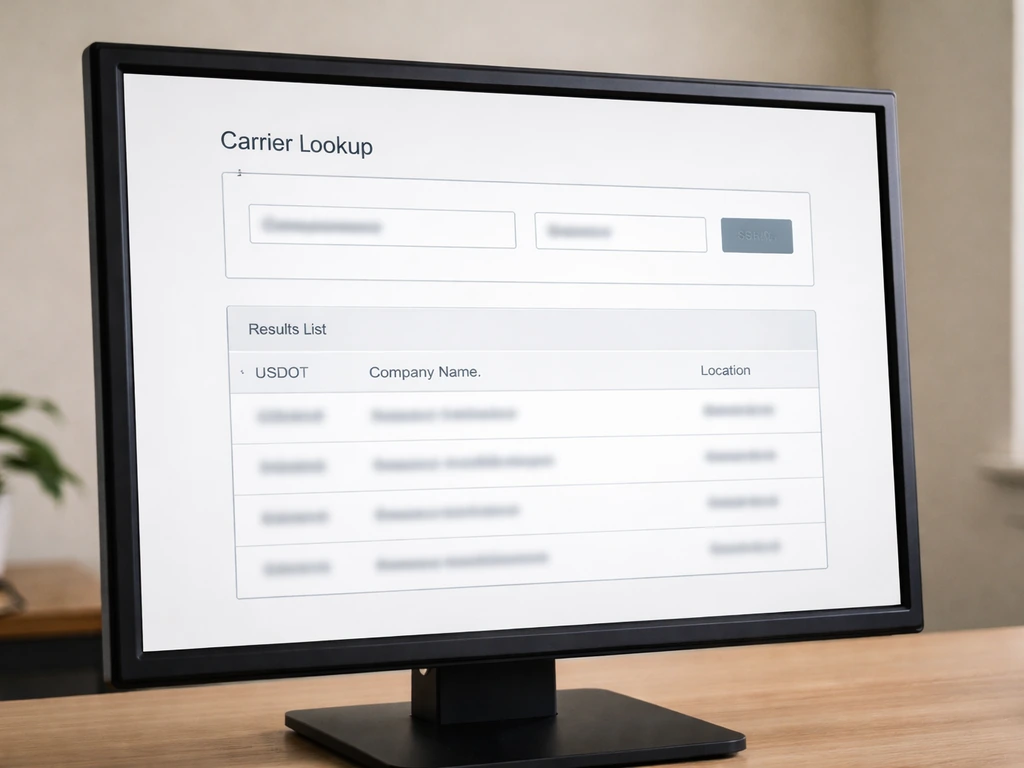
The Federal Motor Carrier Safety Administration's SAFER database is your first stop. Search by company name (try "Schmidt Family Trucking") or by USDOT number if you have it. A SAFER snapshot will show you the carrier's location, identification numbers, cargo type, inspection history, crash summary, and safety rating. Importantly, it also shows the number of power units (trucks) and drivers reported, which is a direct signal of fleet size. A single power unit confirms a true owner-operator setup. Multiple units suggest a larger operation with payroll, equipment debt, and higher revenue potential. The data comes directly from FMCSA's MCMIS and Licensing and Insurance systems, so it is as close to a primary source as you will get for a private carrier.
Iowa Secretary of State business filings
Since the mailing address is in Mapleton, Iowa, the Iowa Secretary of State's business search is the next stop. Look for any entity registered under "Schmidt Family Trucking" or Kurt Schmidt's name. Active status, registration date, and entity type (sole proprietorship vs. LLC vs. corporation) all tell you something about how the business is structured and how seriously it has been formalized. An LLC structure, for instance, suggests some degree of intentional asset separation and possibly higher revenue worth protecting.
UCC-1 filings and equipment liens

UCC-1 financing statements are filed publicly to record a creditor's security interest in personal property, which in trucking almost always means equipment. Searching Iowa's UCC filing system for Kurt Schmidt or Schmidt Family Trucking will show you whether lenders hold liens on his truck or other assets. Active UCC filings mean debt is outstanding against specific collateral. Satisfied or lapsed filings mean the debt has been paid. This is a direct window into the liability side of the net-worth equation.
Property records and PACER
Monona County (where Mapleton is located) property records can be searched through the county assessor's website. Real estate is often the largest single asset for owner-operators who have been in the industry long enough. Assessed value is a conservative proxy for market value but it gives you a floor estimate. On the liability side, PACER, the federal court system's online records portal, lets you check for any bankruptcy filings under Kurt's name or his business entity. A clean PACER search is not proof of wealth, but it rules out one major financial red flag.
Using public signals to estimate without overreaching
The goal here is a reasoned range, not a fake-precise number. Here is how the pieces connect. Fleet size from FMCSA tells you revenue scale: a single truck at full utilization typically generates $100,000 to $200,000 in annual gross revenue for an owner-operator, depending on the lane and freight type. After operating expenses (fuel, insurance, maintenance, permits), net owner income might land between $50,000 and $100,000 annually in a well-managed single-truck operation. Apply a 2x to 2.3x SDE multiple and you get a business valuation range of roughly $100,000 to $230,000. Add the truck's equity (market value minus any remaining lien), real estate equity from property records, and any liquid savings or channel income, then subtract all known liabilities.
YouTube channel contribution is real but modest at this subscriber scale. Channels around 79,000 subscribers with trucking content typically generate a few hundred to a few thousand dollars per month in ad revenue, depending heavily on RPM (revenue per thousand views) and upload frequency. Merch income is supplemental and generally small for a channel of this size. Estimating $10,000 to $30,000 per year in combined channel and merch income would be reasonable ballpark thinking, but it should be treated as an unverified estimate, not a confirmed figure.
Putting that together, a conservative but grounded net-worth range for a single-truck owner-operator with a modest YouTube presence and a decade-plus of operation in a low-cost-of-living Iowa market might land somewhere between $150,000 and $500,000, depending heavily on property ownership, equipment debt status, and business cash reserves. That is a wide range because the key inputs (actual earnings, debt load, property value) are not publicly confirmed. Acknowledging that uncertainty is the only honest approach.
Fact-checking Reddit claims before you trust them
Reddit threads about Trucking With Schmidt do exist. Based on available crawl data, at least one r/Truckers thread mentions Kurt's channel as something worth watching, but the captured content contains no verifiable net-worth figures, no sourced financial claims, and no documentation of any kind. That is typical of how Reddit handles questions like this: commenters share opinions, personal estimates, and sometimes impressive-sounding numbers with zero sourcing.
Here is a simple filter to apply to any Reddit claim about someone's net worth. First, ask whether the commenter cites a primary source (a filing, a public record, a disclosed transaction). If the answer is no, treat the number as speculation. Second, check whether the claim is internally consistent with what you know from FMCSA, business filings, or property records. A Reddit comment claiming an owner-operator with one truck and no disclosed outside income is worth $5 million should immediately fail this test. Third, consider the commenter's likely knowledge base. Someone describing firsthand experience working with the person has more weight than someone who watched a YouTube video and guessed.
Third-party "YouTube net worth" estimator sites deserve the same skepticism. Third-party "YouTube net worth" estimator sites deserve the same skepticism, and that skepticism is also useful when comparing unrelated wealth topics like Eric Schmidt Harbor Freight net worth claims. These tools calculate channel ad revenue based on view counts and average CPM rates, then extrapolate a "net worth" figure. The methodology conflates revenue with net worth and ignores expenses, taxes, debts, and non-channel assets entirely. A number produced by one of these sites through January 2026 for Trucking With Schmidt carries essentially no weight in a genuine net-worth analysis. It might inform one small piece of the income estimate, but it should never be the headline figure.
Building a sourced net-worth range: the workflow

Here is the step-by-step process to do this properly. Each step builds on the last, and each output feeds into either the asset column or the liability column of your estimate.
- Search FMCSA SAFER for Schmidt Family Trucking or the associated USDOT number. Record fleet size, carrier status, and safety rating. Fleet size is your primary revenue-scale indicator.
- Search the Iowa Secretary of State business database for entity registration details. Note entity type, active status, and registration date.
- Search Iowa's UCC filing system for active financing statements under Kurt Schmidt and Schmidt Family Trucking. Each active filing is a liability line item.
- Search Monona County property records for real estate owned under Kurt Schmidt's name. Record assessed value as your floor estimate for real estate assets.
- Run a PACER search for bankruptcy filings. A clean result removes a major uncertainty from the liability side.
- Estimate truck equity: research current market values for a 1999 Kenworth W900 in comparable condition (typically $30,000 to $60,000), then subtract any active UCC lien amount.
- Estimate business value using the SDE multiple method: approximate annual net owner earnings based on fleet size and lane type, then apply a 2x to 2.3x multiple.
- Add a conservative YouTube and merch income estimate only as a supplemental line, labeled clearly as an unverified estimate.
- Subtract all confirmed liabilities (equipment loans from UCC filings, any other public debt obligations).
- Express the result as a range, not a single number, and label each component as confirmed, inferred, or estimated.
Quick reference: what to trust and what to label as an estimate
| Data Source | What It Tells You | Reliability Level |
|---|---|---|
| FMCSA SAFER | Fleet size, carrier status, safety record | Confirmed (primary government database) |
| Iowa Secretary of State | Business entity registration and status | Confirmed (primary state record) |
| Iowa UCC filings | Equipment liens and creditor interests | Confirmed (primary state record) |
| County property records | Real estate assets, assessed value | Confirmed (primary county record) |
| PACER | Bankruptcy filings | Confirmed (federal court system) |
| SDE multiple valuation | Business equity estimate | Inferred (industry benchmark applied to estimated earnings) |
| YouTube CPM estimates | Partial channel revenue approximation | Estimate only (methodology excludes expenses and taxes) |
| Reddit comments | Community opinion, unverified figures | Unverified (requires independent corroboration) |
| Third-party net worth sites | Traffic-based revenue guesses | Unverified (not balance-sheet based) |
The honest conclusion is that Kurt Schmidt's net worth is not publicly documented. What you can build from public records is a transparent, sourced range that clearly distinguishes what is confirmed from what is inferred. For a single-truck Iowa owner-operator with over a decade of operation and a mid-sized YouTube presence, a range of $150,000 to $500,000 is plausible based on the methodology above, but it should always be presented with the caveat that key inputs remain private. That is the same standard applied across this site's wealth profiles, whether the subject is a YouTube trucker in Mapleton or a former Google CEO whose net worth is a matter of public record. Transparency about what you know versus what you are estimating is the only way to make these profiles genuinely useful.
FAQ
How can I tell if Kurt Schmidt is truly single-truck, not a small fleet?
Yes, but you need to check the “power units” and driver count shown in FMCSA’s SAFER snapshot. If SAFER lists more than one power unit or multiple drivers, treat the single-truck assumption as likely wrong, then revise the valuation multiple and the debt exposure (more vehicles usually means more liens and higher working-capital needs).
Should I use the purchase price of the Kenworth when estimating trucking with Schmidt net worth?
Don’t use equipment book price, because truck market values swing with year, mileage, and spec. Instead, estimate the truck’s equity using a used-market range, then subtract any active UCC liens that name specific collateral. If a lien is active, cap the “truck equity” at (estimated market value minus the likely remaining secured amount).
How do I convert county assessed values into something useful for net worth?
Property records can show assessed value, which is typically not the same as market value. A practical approach is to treat assessed value as a floor, then apply a conservative uplift only if recent sale comps are available. Also confirm whether the property is in an individual name or an entity name, because entity ownership changes what’s accessible for a net-worth estimate.
Why do trucking net worth estimates go wrong even when the business seems profitable?
For net worth, focus on outstanding secured debt rather than total business spending. A common mistake is assuming that “cash-flow positive” means “low debt.” In owner-operator trucking, you can have strong revenue but still carry financing on the truck and trailers, which reduces equity even if the operation is profitable.
How should I interpret UCC-1 filings for equipment debt?
Check for UCC-1 filings that are active versus terminated and note the collateral description. If the filing is satisfied or lapsed, it may indicate the lien has been cleared, but it is not a guarantee that no newer lien exists. Look for multiple filings over time and use the most recent active documents as your debt baseline.
Should YouTube ad revenue be a major part of trucking with Schmidt net worth?
You can include it, but only after you estimate how much of that channel income is truly discretionary. Ad revenue and merch income are usually gross, and you would still need to consider taxes, platform fees, production costs, and any reinvestment back into the business. Treat channel income as a small add-on unless the uploads are frequent and view growth is sustained.
How do I avoid overvaluing the business component when using SDE multiples?
Use the “business valuation” step as a range, then sanity-check it against utilization assumptions. If SAFER indicates one power unit and the operation appears intermittent, a top-end earnings multiple may overstate the business value. If SAFER indicates a stable operation with consistent inspection activity, your range can be narrower at the mid-to-low end.
What changes if Schmidt Family Trucking is an LLC rather than a sole proprietorship?
Yes, but it changes the net worth calculation. If the business is structured as an LLC or corporation, some assets may be held separately from Kurt personally, and cash may sit in the entity. Your estimate should then include entity assets and liabilities that you can detect indirectly, and avoid assuming personal ownership of everything.
If PACER shows bankruptcy history, does it automatically mean low net worth?
Bankruptcy can wipe out or restructure certain liabilities, but it does not automatically mean the person is asset-poor. Use bankruptcy records to flag risk and then re-check whether assets appear current and unencumbered (for example, whether UCC liens are active afterward).
How do I evaluate net worth claims from YouTube net worth sites or Reddit?
When you see a precise number online, ask what evidence supports it. If the source does not reference public records (FMCSA, UCC, property, court filings) and instead claims “verified net worth” from a guessing model, treat it as low reliability. A high-quality estimate will separate confirmed inputs (like liens or property ownership) from assumptions (like utilization or earnings).
Next Article
Eric Schmidt Net Worth in 2026: Estimate, Sources, Details
Eric Schmidt net worth estimate for 2026 in billions, split between confirmed holdings and model-based figures, plus how