
Matt Schaub's net worth is most credibly estimated at around $40 million as of April 2026, though that figure carries meaningful uncertainty. His documented NFL career earnings of nearly $96 million give a solid income baseline, but what actually remains as net worth depends on spending, taxes, investments, and liabilities that aren't fully visible in public records. Here's how to think through the number carefully, avoid common identity mix-ups, and check the key signals yourself.
Matt Schaub Net Worth: How It’s Estimated and Verified

Marcus Rothstein
11 Apr 2026
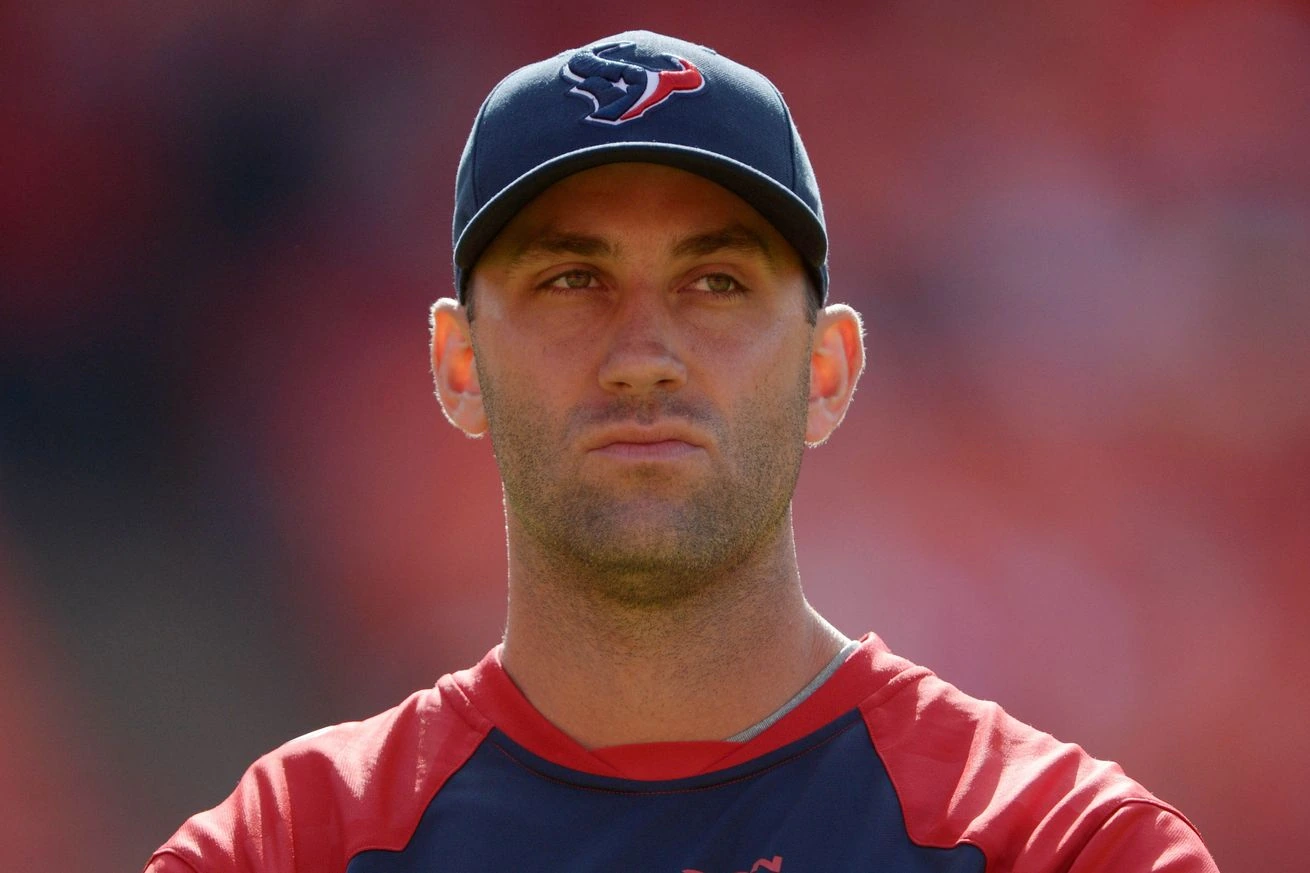
Making sure you have the right Matt Schaub

The Matt Schaub most people are searching for is the former NFL quarterback born in West Chester, Pennsylvania, who played 16 professional seasons before retiring on January 4, 2021. He's best known for his time with the Houston Texans, where he was the franchise's first true franchise QB, and he also played for the Atlanta Falcons, Baltimore Ravens, and a few other stops late in his career. That's the person this article covers.
There are a couple of easy identity mix-ups worth flagging. First, a "Matthew Shaub" (different spelling) appears on financial sites like GuruFocus in insider-trading and executive net-worth contexts. That person is not the NFL quarterback. If you land on a GuruFocus page thinking it's about the football player, you're looking at the wrong individual. Second, there's a technology executive named Matthew Schaub who made news when he was hired by a firm called Prime TSR, previously with Accenture. He also is not the quarterback. If a net-worth result doesn't reference NFL teams, the Houston Texans specifically, or the January 2021 retirement announcement, treat it as potentially misidentified.
What net worth actually means (and why estimates vary so much)
Net worth is straightforward in concept: total assets minus total liabilities at a given point in time. If you own a house worth $2 million and have a $500,000 mortgage, your real estate contributes $1.5 million to net worth. Add up all assets (cash, investments, property, business equity) and subtract all debts (mortgages, loans, other obligations) and you get the number. The same formula applies whether you're calculating your own finances or trying to estimate a public figure's wealth.
The problem with public figures, especially retired athletes, is that outside researchers never have access to a complete, audited balance sheet. What they do have are observable signals: documented contracts, publicly reported property transactions, business registrations, court filings, and interviews. Net-worth databases like CelebrityNetWorth or CelebsMoney aggregate these signals and produce estimates, but those estimates are inferences, not audits. That's why two reputable-sounding sites can publish wildly different numbers for the same person, and it's why you should treat any single published figure as a starting point for your own analysis, not a confirmed fact.
Schaub's verified career earnings: what the contracts tell us

The most reliable anchor for Schaub's wealth is his documented NFL compensation history. Over The Cap, which tracks and archives NFL contract data, lists Matt Schaub's total career earnings at $95,935,000. That's close to $96 million in gross NFL income across 16 seasons. This is about as verified as NFL earnings data gets without seeing an individual's actual tax returns.
The biggest single deal in that total was his 2012 extension with the Houston Texans: blank" rel="noopener noreferrer">a four-year contract worth $62 million, with $24.75 million guaranteed. NBC Sports reported at the time that the deal included $17.5 million to sign and $29.5 million over the first two years, with a fully guaranteed base salary of $7. NBC Sports reported that Schaub's extension also included $17.5 million to sign and $29.5 million over the first two years. 25 million in 2013. That contract alone made Schaub one of the highest-paid quarterbacks in the league at the time it was signed. The Texans had originally acquired him from the Atlanta Falcons back on March 22, 2007, and it took several years of solid performance before they committed to that big extension.
To put the career total in context: $95.9 million in gross earnings, before federal income taxes (typically 37% at that income level), state taxes (Texas has none, which helped during his Texans years), agent fees (usually 3%), and living expenses. A reasonable back-of-envelope calculation after taxes and fees leaves something in the range of $50 to $60 million in after-tax income from NFL contracts over the full career, assuming typical NFL expense structures. Net worth is what's left after subtracting liabilities and what was spent.
Public assets and business holdings worth noting
Real estate
The most clearly documented public asset signal is Schaub's Georgia mansion. Shortly after retiring, he listed the property for $4,895,000, which was covered by both Realtor.com and OutKick. A home listed at just under $5 million is a meaningful asset, and it confirms he held substantial real estate. Whether that home sold at listing price, above, or below, and what mortgage obligations were attached to it, isn't confirmed in publicly available records. But the existence of a $4.89 million listing tells you real estate has been a significant part of his asset picture.
Post-NFL income and public engagements

Schaub has stayed active in football-related media and broadcasting since retiring. He joined the UVA radio broadcast crew as part of the announcing team, which generates modest but real income. He's also appeared on podcasts (including the Wahoo Central Podcast, which is affiliated with Virginia Cavaliers athletics), reflecting both an ongoing public presence and a connection to his University of Virginia background. More recently, he announced a candidacy to lead the NFLPA, as reported by Sports Business Journal. Whether that produces direct income or primarily represents professional visibility, it signals ongoing engagement with the football industry that could lead to further opportunities.
Beyond those public signals, documented information about private investments, LLC holdings, or equity stakes is limited. That's not unusual for retired athletes. Most private investment activity simply doesn't appear in public registries unless it involves property transactions, court disputes, or business filings that become part of a public record.
Where the wealth research actually comes from
Responsible net-worth research pulls from several types of sources. Understanding what each one can and can't tell you is the key to interpreting estimates correctly.
- NFL contract databases (Over The Cap, Spotrac): highly reliable for career earnings totals and contract structures. These are the strongest signal for any NFL player's gross income.
- Major sports media (ESPN, NBC Sports/ProFootballTalk): reliable for specific contract reporting at the time of signing, including guaranteed amounts and structure details.
- Property records and real estate coverage (county recorder offices, Realtor.com, OutKick): useful for identifying major real estate assets and approximate values. Mortgage obligations aren't always publicly visible.
- Business/entity registries (state secretary of state filings): can surface LLC ownership, business formations, and registered agent relationships. Useful but incomplete for private individuals.
- Court filings and dockets: liens, judgments, and bankruptcy records can reveal liabilities. Absence of filings reduces (but doesn't eliminate) liability concerns.
- Celebrity wealth estimators (CelebrityNetWorth, CelebsMoney): aggregator estimates based on observable signals. Useful as reference points but not primary sources. Wide variance between sites is normal.
- Career and biographical coverage (ESPN, team sites, UVA athletics): helps confirm identity and timeline, which is essential before trusting any financial estimate you find.
How to verify any claim yourself (step by step)

- Confirm identity first. Look up the NFL retirement announcement (ESPN reported it on January 4, 2021) and verify the career timeline matches: Atlanta Falcons, Houston Texans, then later stops. If a source doesn't match this timeline, it's the wrong person.
- Anchor income using contract databases. Pull the Over The Cap career earnings figure and the ESPN-reported $62 million 2012 extension. These are your income floor.
- Check property records. Search county property records in Georgia (and any other states where you have reason to believe he held property) for transaction history. The $4.89 million listing is your starting reference point.
- Search for liabilities. Run name searches on PACER (federal court dockets) and relevant state court systems for litigation, judgments, or liens. If nothing comes up, that's a positive signal, but private debt still can't be ruled out.
- Compare estimator outputs critically. CelebrityNetWorth says $40 million; CelebsMoney shows $100,000 to $1 million (which almost certainly reflects a data or methodology error given documented career earnings alone). The wide gap tells you to weight estimators against the contract-anchored income data, not treat them as equally reliable.
- Note what you can't see. Private investments, brokerage accounts, business equity stakes, and informal liabilities are not publicly disclosed. Any estimate, including this one, has uncertainty in those areas.
Current net worth snapshot: range and confidence level
| Source / Signal | Figure | Reliability |
|---|---|---|
| Over The Cap (career earnings) | $95,935,000 gross | High — documented contract data |
| ESPN (2012 extension) | $62M total / $24.75M guaranteed | High — contemporaneous media report |
| Georgia mansion listing | $4,895,000 (listing price) | Moderate — listing price, not confirmed sale price |
| CelebrityNetWorth estimate | $40 million net worth | Low-moderate — estimator inference, no audit |
| CelebsMoney estimate | $100K–$1M net worth | Low — likely data/methodology error given documented earnings |
| Post-NFL income (broadcasting, NFLPA activity) | Not publicly quantified | Signal only — income level unknown |
Taking everything together: Schaub's documented gross NFL earnings of ~$96 million, adjusted for taxes, fees, and reasonable living expenses over a 16-season career, suggest retained wealth somewhere in the $30 to $50 million range is plausible. The CelebrityNetWorth estimate of $40 million lands in the middle of that range and is the most cited figure. I'd treat $30 to $50 million as the reasonable estimate range, with $40 million as the best single point estimate, at a moderate confidence level. The CelebsMoney figure of under $1 million is almost certainly wrong and should be disregarded given the contract documentation.
Confidence is limited (not low, but not high) because: private investments and liabilities aren't publicly disclosed; the Georgia mansion's final sale details aren't confirmed; and post-retirement income from broadcasting and other engagements is unquantified. This is a well-reasoned estimate range, not a verified figure.
What could move the number from here

For a retired NFL player, the big wealth movers going forward aren't new playing contracts. They're investment performance, business ventures, real estate transactions, and media/broadcasting income. Schaub's NFLPA candidacy is worth watching: if he takes on a leadership role there, it likely comes with a significant salary and would meaningfully increase annual income. Broadcast and media roles, like his work with UVA radio, tend to pay modestly in isolation but can open doors to larger TV or podcast deals.
On the downside, any major undisclosed liabilities (private loans, investment losses, litigation) could reduce net worth below the current estimate range. Real estate market shifts in Georgia or wherever else he holds property would also move the number, since real estate represents a confirmed and significant slice of his public asset picture.
Over a 6 to 24 month window, the most likely catalyst for a visible change in published estimates would be either a major new professional role (NFLPA leadership, a media contract) or a publicly reported real estate transaction. Neither would dramatically rewrite the picture, but both would narrow the uncertainty range. The broader wealth trajectory for someone with nearly $96 million in career gross earnings and demonstrated real estate holdings is unlikely to collapse barring an undisclosed liability surprise.
If you're looking for context on how wealth profiles are built for other public figures with similar surnames, it's worth knowing that this site tracks a range of individuals in this space. For example, Callen Schaub's net worth profile covers a very different kind of public figure, an artist known for unconventional painting techniques, showing how income sources and wealth estimation methods vary dramatically depending on the career type. Similarly, Chris Schauble's net worth illustrates how broadcast media careers are evaluated, which is relevant given Schaub's own post-NFL media trajectory.
In the business and design world, profiles like Peter Schreyer's net worth show how long-tenured corporate careers build wealth differently than sports contracts, while academic figures like Peter Scholze's net worth demonstrate the contrast between high-profile achievement and more modest financial accumulation. For arts and performance figures, the Peter Schickele net worth profile is a useful comparison point, as is the Peter Schumann net worth profile for long-career creative figures. Entrepreneurs and executives tracked on this site, such as in the Peter Schaefer net worth profile, round out how different financial signals require different verification approaches. And for a closer surname match, the Peter Schaub net worth profile covers another Schaub-surname figure whose wealth trajectory and documentation methods offer a useful methodological parallel.
Bottom line
Matt Schaub, the NFL quarterback, has a most credible net worth estimate of around $40 million as of April 2026, with a reasonable range of $30 to $50 million. That estimate is anchored by nearly $96 million in documented career gross earnings, a confirmed real estate holding at roughly $4.9 million, and the CelebrityNetWorth estimate as a reference point. The wide gap between published estimator figures (from under $1 million to $40 million) is a red flag that should push you toward the contract-anchored approach rather than trusting any single database number. Private liabilities and investment performance remain the biggest unknowns. Watch for NFLPA leadership news and any further real estate transactions as the clearest near-term signals that could update the picture.
FAQ
How can I tell whether a “matt schaub net worth” page is using the NFL quarterback or the wrong person?
If you see a net-worth figure that does not mention his NFL career, the Houston Texans (and his 2012 extension), or his 2021 retirement timeline, treat it as a likely identity error. The article flags at least two similarly named non-players that can appear in databases.
Is Matt Schaub’s net worth number an audited figure or just an estimate?
No. Net-worth sites generally estimate using observable signals (contracts, property transactions, public filings), but they rarely have access to a full audited balance sheet or tax returns. That is why two sites can disagree sharply even when both cite “sources.”
When estimating Matt Schaub’s wealth, should I focus on guaranteed money or total contract value?
A contract’s “guaranteed” amount matters more than the headline total value. In his case, the 2012 Texans deal included a sizable guaranteed component, and the rest of the contract value depends on events like roster status and performance.
What rough steps can I use to sanity-check a net-worth estimate from his career earnings?
For practical back-of-envelope checks, apply taxes and agent fees to gross NFL income, then consider living expenses and any carrying costs from assets like real estate. The article’s range implies that a large portion of gross earnings may not remain as liquid wealth.
How much could the Georgia mansion sale price or mortgage details change his net worth estimate?
Yes, real estate can move the number up or down even if no new income arrives. If the Georgia property sold for a different price than the listing, or if there were mortgages or refinancing changes, the net-worth impact would be different from what the listing alone suggests.
Which post-retirement income sources are most likely to change his net worth over time?
Post-NFL roles like radio and podcast appearances are usually less likely to swing net worth dramatically compared with investing and major property transactions. However, a higher-paying leadership position, like an NFLPA role, could materially increase annual income if it comes with a substantial salary.
What’s a red flag that a published Matt Schaub net worth estimate is probably wrong?
If an estimate claims something like near-zero wealth without credible contract-anchored context, it should be treated as unreliable. The article notes one published figure under $1 million that conflicts with the documented NFL earnings baseline.
How should I combine different sources to build a more reliable range than a single website provides?
Don’t anchor on a single snapshot number from one site. Instead, compare multiple approaches: contract earnings baselines, credible property listings or transaction records, and any public filings that confirm business ownership or major debts.
Can Matt Schaub’s net worth be lower than most estimates even if his career earnings were huge?
Generally, yes. Even with substantial career earnings, large undisclosed liabilities (private loans, litigation, investment losses) could reduce net worth below the expected retained range. The article highlights that liabilities are one of the biggest unknowns.
What events are most likely to cause published net-worth estimates to change in the next year or two?
The most likely moments to see updated published estimates are public updates that add new verifiable inputs, such as a major media deal, NFLPA leadership compensation news, or a newly reported real estate transaction. Minor podcast appearances alone are less likely to narrow the uncertainty meaningfully.
Next Article
Peter Schaub Net Worth: How to Verify and Estimate Wealth
Learn how to verify Peter Schaub net worth with source-based estimates, income and assets, plus record checks.